Free shipping on all orders
Table of Contents
- Why Undertones Matter More Than Shade Depth
- How to Identify Your Skin Undertone
- Key Ingredients That Keep Vegan Foundation True to Undertone
- Non-Oxidizing Vegan Foundation: How It Protects Your Color Match
- Vegan Foundation for Oily Skin Without Shade Shift
- Coverage Levels and Finish Types That Flatter Every Undertone
- Testing and Matching Your Vegan Foundation Before You Buy
- Cruelty-Free Certifications That Guarantee Ethical Vegan Beauty
- Frequently Asked Questions
Last Updated: September 2, 2026
Why Undertones Matter More Than Shade Depth
Your skin undertone is the canvas beneath your surface complexion. It's the difference between a foundation that disappears into your skin and one that sits on top like a mask or shifts orange by lunchtime.
Most people chase shade depth first, finding their "light," "medium," or "deep" and stopping there. But shade depth tells only half the story. Two people with identical depth can have completely opposite undertones: one warm, one cool, one olive. A foundation that's the perfect depth but wrong undertone will oxidize, appear ashy, or clash with your natural coloring no matter how flawless the formula.
Vegan foundations have a distinct advantage here. According to market research on vegan cosmetics growth, the vegan cosmetics market reached $4.9 billion in 2025 and is projected to reach $9.8 billion by 2034, growing at 7.75% annually. That explosive growth has forced vegan brands to innovate on color science, not just ethics. Brands like Anjelic Beauty have engineered formulas specifically designed to honor undertones across 40+ shades, using proprietary technology like the Smart Glam System™ to ensure color stays true from application to night.
Undertone matching is the single most important variable in foundation selection. Get this right, and you'll find a product that works.
How to Identify Your Skin Undertone
Your undertone is fixed and determined by the amount and type of melanin in your skin. It doesn't change with sun exposure or season. There are three primary undertone categories: warm (yellow and golden pigmentation), cool (pink, red, and blue), and neutral (balanced mix). Some people also have olive undertones, which are cool or warm undertones with a greenish cast.
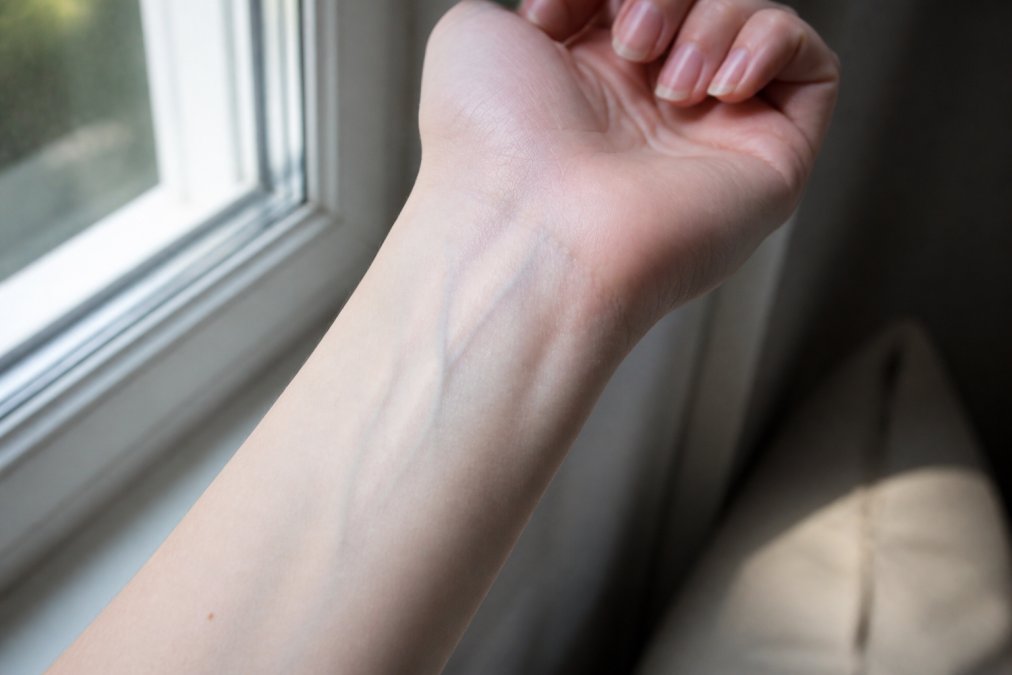
The Vein Test
Look at the veins on your inner wrist in natural daylight.
Warm undertones: Your veins appear greenish or olive-toned. Cool undertones: Your veins appear blue or purple. Neutral undertones: Your veins appear a mix of green and blue, or it's difficult to categorize them.
This is the most reliable single indicator, though about 15% of people find their veins ambiguous. If that's you, move to the next test.
The Metal Test
Hold a piece of gold jewelry and a piece of silver jewelry against your skin near your jawline or collarbone in natural daylight.
Warm undertones: Gold looks more flattering and harmonious. Cool undertones: Silver looks brighter and more natural. Gold may appear dull or yellow. Neutral undertones: Both metals look equally good.
This test leverages color theory directly: gold contains warm tones; silver contains cool tones. When your undertone matches the metal's undertone, harmony occurs.
The Natural Light Test
Observe your skin in natural daylight without makeup, preferably near a window or outdoors.
Warm undertones: Your skin has a golden, peachy, or warm glow. Cool undertones: Your skin has a pinkish, rosy, or reddish cast. Neutral undertones: Your skin doesn't obviously lean warm or cool.
Artificial lighting distorts undertone perception, which is why foundation matching in-store under harsh lighting often fails. Always verify your undertone in natural daylight before committing to a shade.
Key Ingredients That Keep Vegan Foundation True to Undertone
The formula matters as much as the shade. Certain ingredients protect undertone accuracy and prevent oxidation, the chemical reaction that causes foundation to shift color on skin.
Silicone-free formulas reduce the risk of undertone distortion. Silicones can create a barrier that alters how pigments interact with your skin. Vegan foundations formulated without silicones allow pigments to sit naturally.
Plant-based pigments engineered specifically for undertone matching are the game-changer. Anjelic Beauty's Smart Glam System™ uses vegan pigments calibrated to mirror natural undertones across their 40+ shade range, preventing the oxidation that causes orange or ashy shifts.

Hyaluronic acid and glycerin maintain skin hydration, which stabilizes foundation color. Dehydrated skin absorbs foundation unevenly, creating patches where the undertone appears distorted.
Niacinamide strengthens the skin barrier. A compromised barrier causes foundation to oxidize faster. Niacinamide supports barrier health, indirectly protecting your color match.
Antioxidants like vitamin E and green tea extract slow oxidation directly, keeping your foundation color stable for 12+ hours.
The best vegan foundations for undertones combine all of these: silicone-free bases, undertone-specific pigments, hydrating actives, and antioxidant protection.
Non-Oxidizing Vegan Foundation: How It Protects Your Color Match
Oxidation is the enemy of undertone matching. It's the chemical process where foundation darkens and shifts color on your skin throughout the day. A warm foundation can turn orange. A cool foundation can turn ashy.
Traditional foundations oxidize because their formulas contain ingredients that react with your skin's natural oils and pH. Vegan formulas have an advantage: plant-based pigments and antioxidant-rich ingredients naturally resist oxidation better than synthetic alternatives.
Non-oxidizing technology works by creating a stable pigment matrix that doesn't interact with skin chemistry. Anjelic Beauty's True Tone Technology is engineered specifically for this: the formulas are calibrated to remain color-stable from application through nighttime removal, preventing the undertone shift that makes so many foundation purchases regrettable.
The practical benefit: a non-oxidizing vegan foundation means you can trust your morning shade match at 8 PM. This is especially critical for people with deeper or complex undertones, who historically have experienced more dramatic oxidation shifts.
Vegan Foundation for Oily Skin Without Shade Shift
Oily skin presents a unique challenge: excess sebum accelerates oxidation and can cause foundation to separate, exposing undertones unevenly.
Vegan foundations for oily skin need oil-control technology and oxidation resistance. Mattifying ingredients like silica and clay absorb excess oil without creating a heavy finish. Plant-derived alternatives like rice powder or kaolin clay tend to be gentler on color stability than traditional silica.
Sebum-resistant pigments are formulated to maintain color integrity even when skin produces oil. Lightweight, water-based vegan formulas are ideal for oily skin because they don't rely on heavy silicones or oils that can clog pores or cause oxidation.
For people with oily skin and complex undertones, the challenge is finding a formula that controls shine without sacrificing undertone accuracy. The vegan beauty market has innovated aggressively to solve this problem. According to research on consumer priorities in beauty, Gen Z consumers prioritize both ethical beauty and performance, spending an average of $84 per quarter on health and beauty products.
Avoid foundations with heavy silicones or synthetic oils if you have oily skin and are concerned about undertone shift. Opt for lightweight, water-based vegan formulas with proven mattifying technology.
Coverage Levels and Finish Types That Flatter Every Undertone
Foundation coverage and finish don't determine undertone accuracy, but they affect how visible your undertone is once applied.
Sheer coverage lets your natural undertone show through clearly, making shade matching critical. Medium coverage is the Goldilocks zone for most people, providing enough opacity to even out skin tone while keeping undertone visible and natural. Full coverage offers the most opacity and can sometimes hide undertone matching mistakes due to high pigment density, though this doesn't mean you should ignore undertone when selecting full-coverage formulas.
Finish types interact with undertone perception: Matte finishes can make warm undertones appear warmer and cool undertones appear cooler due to light-absorbing properties. Dewy finishes reflect light and can soften the appearance of undertone. Satin finishes split the difference, offering subtle sheen without dramatically altering how the undertone reads, making them often the safest choice for undertone-conscious buyers.
Testing and Matching Your Vegan Foundation Before You Buy
Online shopping for foundation is risky but manageable with a systematic approach.
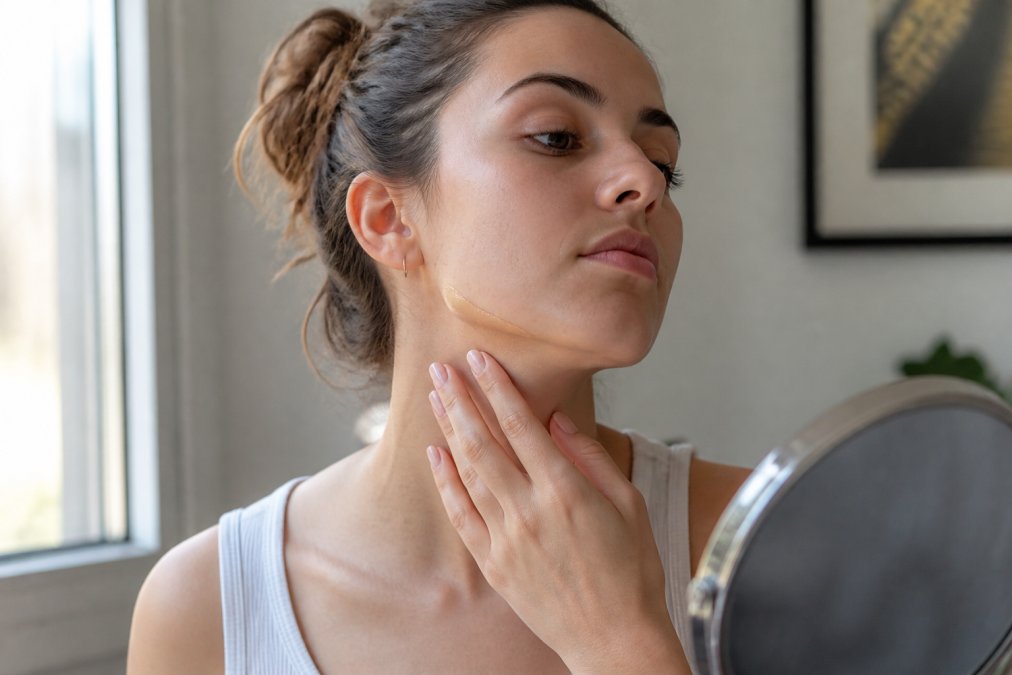
Step 1: Get swatches in natural daylight. If a brand offers sample sizes or swatches, order them. Apply the swatch to your jawline and observe in natural daylight for at least 10 minutes. Don't judge foundation in artificial light.
Step 2: Check for oxidation over time. Apply a small amount of the swatch to your jawline in the morning and observe it throughout the day. Does it shift color? This real-world test is more valuable than any in-store swatch.
Step 3: Verify undertone, not just depth. Once you've confirmed the shade doesn't oxidize, assess whether the undertone is correct. Does it blend seamlessly into your neck and jawline?
Step 4: Order the full size with confidence. Once you've confirmed the swatch is correct, order the full-size product. Brands like Anjelic Beauty offer their AuraAlign™ Liquid Changing Foundation at $40, with the assurance that the shade you've tested will perform consistently.
Many vegan brands now offer virtual try-on tools powered by AI. While not perfect, they're a useful starting point for narrowing down your shade range before ordering swatches.
Cruelty-Free Certifications That Guarantee Ethical Vegan Beauty
"Vegan" and "cruelty-free" are not synonymous. A product can be vegan but still tested on animals, or cruelty-free but contain animal-derived ingredients like lanolin.
If ethical sourcing matters to you, look for third-party certifications rather than brand claims alone.
Leaping Bunny certification is the gold standard, administered by the Coalition for Consumer Information on Cosmetics. It requires brands to submit to independent audits and guarantees no animal testing at any stage of product development.
PETA certification certifies both vegan and cruelty-free products and maintains a publicly searchable database of certified brands.
Choose Cruelty-Free is an Australian certification increasingly recognized internationally, certifying cruelty-free products with strict standards around parent company ownership and ingredient sourcing.
Vegan Society certification specifically certifies vegan products with no animal ingredients or testing.
Anjelic Beauty is 100% vegan and never tested on animals. The formulas are built on plant-based actives and vegan pigments, and the manufacturing process excludes animal testing entirely. According to research on consumer trust in beauty certifications, 45% of consumers believe vegan beauty products are better for their health, but trust increases significantly when certifications are visible.
Finding the best vegan foundation for undertones requires understanding your undertone first, then selecting a formula engineered to honor it. The vegan beauty market has matured dramatically; brands are no longer choosing between ethics and performance. Anjelic Beauty's AuraAlign™ Liquid Changing Foundation ($40) combines both, with True Tone Technology designed to prevent oxidation and Smart Glam System™ formulations tested across 40+ undertone-specific shades. If you've struggled with foundation oxidation or undertone matching, a non-oxidizing vegan formula calibrated for your specific undertone is the solution. Get yours now and experience foundation that stays true from morning to night.
=== FAQ ANSWERS (audit these too, same rules) ===
[1] Q: How do I determine my skin's undertone for foundation matching? A: Three simple tests reveal your undertone. First, examine your wrist veins in natural daylight: blue or purple veins indicate cool undertones, green suggests warm, and a mix means neutral or olive. Second, hold gold and silver jewelry against your skin, if gold looks better, you have warm undertones; silver indicates cool. Third, look at how your skin reacts to sun exposure: warm undertones tan easily, while cool undertones burn more readily. Undertone matters more than shade depth in foundation selection, and testing on your jawline in natural daylight ensures the correct shade disappears into your skin.
[2] Q: Why does my vegan foundation oxidize and turn orange by afternoon? A: Oxidation occurs when iron oxide pigments in foundation react with oxygen and your skin's natural oils throughout the day, causing a color shift. Non-oxidizing vegan foundations use advanced pigment technology to prevent this reaction. Anjelic Beauty's AuraAlign™ Liquid Changing Foundation features True Tone Technology, engineered specifically to keep color stable from morning until night without fading or shifting. This technology works by using vegan pigments that don't interact with oxygen or sebum, maintaining your true undertone match all day.
[3] Q: What vegan ingredients help foundation blend better with natural undertones? A: Skincare-grade actives like hyaluronic acid, plant-derived glycerin, and botanical extracts improve foundation blendability while enhancing skin radiance. Hyaluronic acid hydrates the skin, allowing foundation to sit smoothly without settling into pores or emphasizing texture. Plant oils and silicone-free polymers create a lightweight texture that adapts to your skin's natural tone without masking it. Anjelic Beauty's Smart Glam System™ combines these actives with vegan pigments engineered to mirror your natural undertone across 40+ shades, ensuring seamless color matching regardless of your skin depth.
[4] Q: Do vegan foundations offer the same shade range as traditional brands? A: Yes, modern vegan foundations now match or exceed traditional brands in shade depth and undertone precision. The vegan cosmetics market reached $4.9 billion in 2025 and is expected to grow to $9.8 billion by 2034, driven partly by brands expanding their shade ranges to serve diverse skin tones. Many drugstore vegan foundations now offer explicit warm, cool, and neutral undertone labeling, making it easier to find your match. Anjelic Beauty offers 40+ shades specifically tested across diverse skin tones, with True Tone Technology ensuring each shade matches your natural undertone without oxidation or color shift.
Frequently Asked Questions
How do I determine my skin's undertone for foundation matching?
Three simple tests reveal your undertone. First, examine your wrist veins in natural daylight: blue or purple veins indicate cool undertones, green suggests warm, and a mix means neutral or olive. Second, hold gold and silver jewelry against your skin, if gold looks better, you have warm undertones; silver indicates cool. Third, look at how your skin reacts to sun exposure: warm undertones tan easily, while cool undertones burn more readily. Undertone matters more than shade depth in foundation selection, and testing on your jawline in natural daylight ensures the correct shade disappears into your skin.
Why does my vegan foundation oxidize and turn orange by afternoon?
Oxidation occurs when iron oxide pigments in foundation react with oxygen and your skin's natural oils throughout the day, causing a color shift. Non-oxidizing vegan foundations use advanced pigment technology to prevent this reaction. Anjelic Beauty's AuraAlign™ Liquid Changing Foundation features True Tone Technology, engineered specifically to keep color stable from morning until night without fading or shifting. This technology works by using vegan pigments that don't interact with oxygen or sebum, maintaining your true undertone match all day.
What vegan ingredients help foundation blend better with natural undertones?
Skincare-grade actives like hyaluronic acid, plant-derived glycerin, and botanical extracts improve foundation blendability while enhancing skin radiance. Hyaluronic acid hydrates the skin, allowing foundation to sit smoothly without settling into pores or emphasizing texture. Plant oils and silicone-free polymers create a lightweight texture that adapts to your skin's natural tone without masking it. Anjelic Beauty's Smart Glam System™ combines these actives with vegan pigments engineered to mirror your natural undertone across 40+ shades, ensuring seamless color matching regardless of your skin depth.
Do vegan foundations offer the same shade range as traditional brands?
Yes, modern vegan foundations now match or exceed traditional brands in shade depth and undertone precision. The vegan cosmetics market reached $4.9 billion in 2025 and is expected to grow to $9.8 billion by 2034, driven partly by brands expanding their shade ranges to serve diverse skin tones. Many drugstore vegan foundations now offer explicit warm, cool, and neutral undertone labeling, making it easier to find your match. Anjelic Beauty offers 40+ shades specifically tested across diverse skin tones, with True Tone Technology ensuring each shade matches your natural undertone without oxidation or color shift.
This article was written using GrandRanker