Free shipping on all orders
Table of Contents
- Understanding Skin Tone vs. Undertone
- What Are Skin Undertones and Why They Matter
- The Vein Test for Skin Undertone
- Three Additional At-Home Tests to Find Your Undertone
- Foundation Oxidation and Undertone Mismatch
- Using AI and Professional Tools to Find Your Undertone
- How to Choose Foundation Based on Your Undertone
- Conclusion
- Frequently Asked Questions
Last Updated: August 31, 2026
Understanding Skin Tone vs. Undertone
Your skin tone and undertone are two different things, and confusing them is one of the biggest reasons people struggle to find skin undertone accurately. Skin tone refers to the surface depth of your complexion, fair, light, medium, tan, or deep. Undertone is the subtle hue beneath your skin's surface, and it's genetically fixed and permanent.
Think of it this way: skin tone is like the base color of a wall, while undertone is the tint mixed into the paint. You can tan or lighten your skin tone with sun exposure or skincare, but your undertone stays the same throughout your life. This distinction matters enormously for foundation matching, color analysis, and choosing makeup shades that harmonize with your natural complexion.
According to Chromara's 2026 research on foundation mismatch, 69% of women still struggle to find the right foundation tone despite expanded shade ranges. The core problem isn't the number of shades available, it's that most people don't understand their undertone, so they pick the wrong shade even when their exact match exists on the shelf.
What Are Skin Undertones and Why They Matter
Undertone is the subtle, permanent hue beneath your skin's surface. It's determined by the mix of melanin, hemoglobin, and carotenoids in your skin and doesn't change with sun exposure, seasons, or skincare routines. Understanding your undertone is essential because it determines which colors in makeup, clothing, and hair will harmonize with your natural coloring versus clash with it.
There are three primary undertone categories: warm, cool, and neutral. According to Sara Millecam, Master Medical Esthetician at Lash Lift Store, warm undertones carry yellow, peach, or golden hues. Cool undertones contain hints of blue, pink, or red. Neutral undertones blend both warm and cool tones in roughly equal measure.
Why does this matter for makeup? Foundation oxidation, when your foundation shifts color and turns orange or ashy by midday, happens partly because the undertone doesn't match your skin. When you wear a warm foundation over cool undertones (or vice versa), the mismatch becomes more obvious as the formula oxidizes. Anjelic Beauty's Smart Glam System™ addresses this by engineering pigments that mirror your natural undertone across 40+ shades, ensuring your color stays true from application through wear.

The Vein Test for Skin Undertone
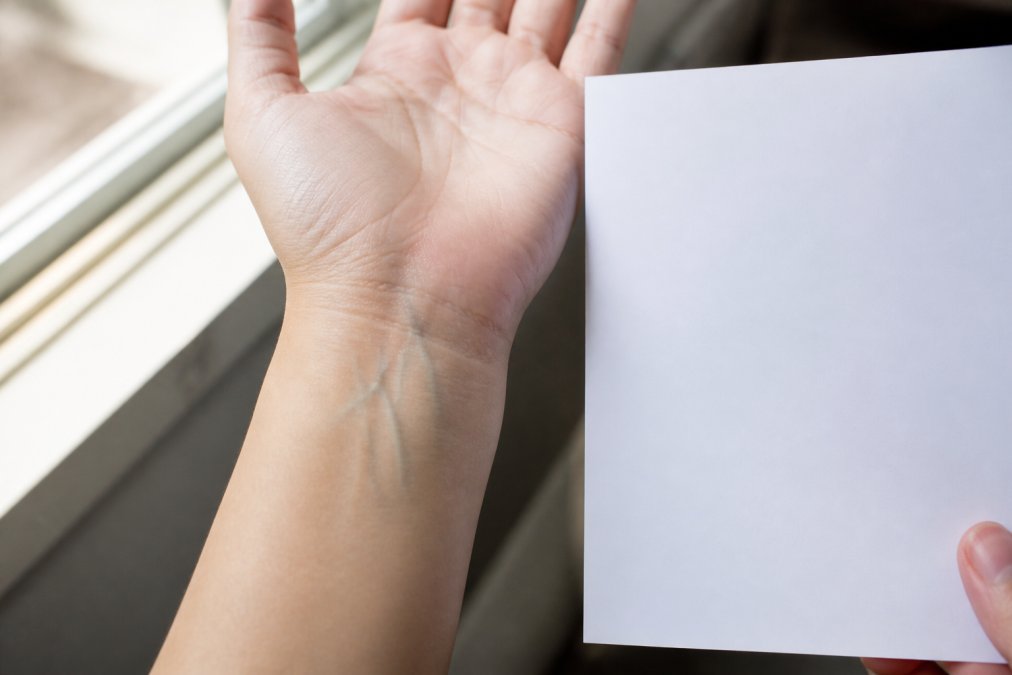
The vein test is the most popular at-home method for determining undertone, but it's also frequently misunderstood and unreliable. The idea is simple: look at the veins on your inner wrist. If they appear greenish, you likely have warm undertones. If they look bluish or purple, you likely have cool undertones. If they're a mix of both, you probably have neutral undertones.
How to Perform the Vein Test Correctly
To perform the vein test properly, go to a window with natural daylight, not artificial indoor lighting, which skews color perception. Hold your wrist up to the natural light and look at the veins on the inside of your forearm. Examine a section of veins that's at least two inches long and note whether they appear predominantly green, blue, purple, or mixed.
The challenge with this test is that vein color depends on several factors beyond undertone: skin thickness, hydration levels, blood flow, and even the time of day affect how veins appear. People with thicker skin often see veins as more blue because the color is filtered through more tissue.
Why the Vein Test Isn't Always Reliable
The vein test fails for many people, particularly those with deeper skin tones or olive undertones. According to HueCheck's 2026 undertone analysis, about 40% of people misidentify their own undertone when using DIY methods alone, and the vein test is a major culprit.
For people with deeper skin tones, veins are harder to see clearly because melanin absorbs light. For people with olive undertones, a greenish cast that sits between warm and cool on the color spectrum, veins often appear greenish regardless of whether the undertone is actually warm, cool, or neutral. The vein test also ignores the fact that many people have mixed undertones, and undertone can vary slightly across different areas of the body.
Three Additional At-Home Tests to Find Your Undertone
Because the vein test is unreliable on its own, combining it with additional tests increases accuracy. The three most accessible at-home tests are the white paper test, the gold versus silver jewelry test, and the sun sensitivity test.
The White Paper Test
Hold a piece of pure white paper next to your face in natural daylight. If your skin looks yellowish, peachy, or golden against the white, you likely have warm undertones. If it looks pink, rosy, or bluish, you likely have cool undertones. If it looks balanced, you probably have neutral undertones.
This test works because white is a neutral baseline. The key is using true white paper, not cream or off-white. The limitation is that surface redness from inflammation, rosacea, or recent sun exposure can mimic cool undertones, so perform this test when your skin is in its normal state.
The Gold vs. Silver Jewelry Test
Hold a gold piece of jewelry next to your face, then a silver piece, and observe which one makes your skin look more vibrant. If gold flatters you more, you likely have warm undertones. If silver does, you likely have cool undertones. If both look equally good, you likely have neutral undertones.
However, this test has significant limitations. Many people genuinely suit both metals, and personal preference often overrides undertone compatibility. The color of the jewelry itself matters, warm-toned gold looks different from cool-toned rose gold. match shirt colors.
The Sun Sensitivity Test
Your skin's reaction to sun exposure can hint at your undertone. People with warm undertones tend to tan gradually and develop a golden or bronze cast. People with cool undertones often burn more easily and tan to a more neutral or ashy bronze. People with neutral undertones typically tan evenly without a strong warm or cool shift.
This test requires honesty about your actual sun response. Additionally, genetics, ethnicity, and melanin levels all influence sun response independently of undertone, so this test alone is insufficient.
The most reliable approach combines all three of these tests along with the vein test. If three out of four tests point to the same undertone, you've likely identified it correctly.
Foundation Oxidation and Undertone Mismatch
Foundation oxidation, when your foundation shifts color and turns orange, ashy, or muddy throughout the day, is often caused by undertone mismatch. When your foundation undertone doesn't match your skin undertone, the mismatch becomes exaggerated as the formula oxidizes. A warm foundation over cool skin reads as increasingly orange as it settles. A cool foundation over warm skin looks progressively ashy and gray.
According to Chromara's 2026 analysis of foundation returns, shade mismatch drives 20% to 65% of online beauty product returns, with foundation experiencing disproportionately high return rates. The primary cause isn't shade depth, it's undertone mismatch. A foundation can be the perfect depth but the wrong undertone, making it unwearable.
Anjelic Beauty's approach uses True Tone Technology, which ensures that each shade's undertone is engineered to match actual skin undertones. Rather than darkening existing formulas to create deeper shades, Anjelic Beauty builds true undertone variation across all 40+ shades, ensuring a cool-undertone deep shade actually contains cool pigments.
Using AI and Professional Tools to Find Your Undertone
While at-home tests provide a useful starting point, AI-powered undertone detection and professional analysis offer significantly higher accuracy. AI undertone scanners analyze thousands of color data points from a photo or live camera feed, eliminating the guesswork and lighting variables that compromise manual methods.
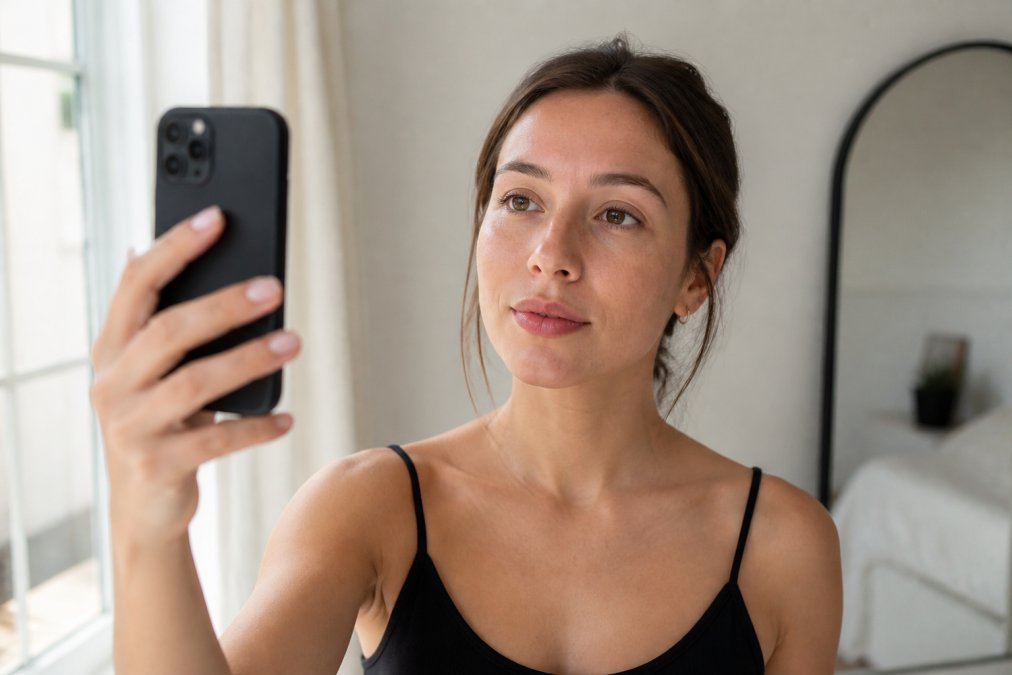
According to the Marketintelo Skin Undertone Scanner Market Report, AI undertone scanners report 94-97% accuracy on lighter skin tones but 86-89% on darker skin tones. This gap reveals a documented bias in current AI technology, though leading vendors are actively working to close it.
Several brands now offer AI-powered foundation matching tools. LOOKFANTASTIC's Foundation Finder uses a spectrophotometer to capture color profiles of 3,500+ foundation shades and matches them to customer selfies. In testing with 400 Glossybox subscribers, 80% said the match was exact or close to their actual skin tone. Clarins implemented an in-store AI Shade Finder that provides results in under 60 seconds, achieving a 96% match rate compared to a professional makeup artist.
For the most personalized approach, apps like Dcypher allow you to take three scans of your face to analyze skin tone and undertone, then create a bespoke foundation matched to your exact specifications. If you prefer professional guidance, a color analyst or makeup artist trained in undertone assessment can provide personalized recommendations.
How to Choose Foundation Based on Your Undertone
Once you've identified your undertone, the next step is choosing a foundation that matches it. For warm undertones, look for foundations with yellow, peach, golden, or warm-brown undertones. For cool undertones, seek foundations with pink, red, or bluish undertones. For neutral undertones, you have the most flexibility and can wear either warm or cool foundations.
The challenge is that undertone labeling isn't standardized across brands. This is why testing in natural daylight is essential. Apply the foundation to your jawline and blend it down your neck. Step outside or near a window with natural light and observe the match. If it disappears into your skin and looks like a second skin, you've found the right undertone. If it looks orange, ashy, gray, or muddy, the undertone is wrong.
Anjelic Beauty's 40+ shade range is built with undertone variation in mind. Each depth includes warm, cool, and neutral options, so you're not forced to choose between getting the right depth and getting the right undertone. The Smart Glam System™ ensures that pigments are engineered to match your natural undertone, so the color stays true from application through wear without oxidizing to an unflattering tone.
When shopping online, read reviews from people with similar undertones and skin depths. Real-skin tested feedback from people like you is invaluable when you can't swatch in person.
Conclusion
Finding your skin undertone requires moving beyond a single test and understanding that undertone is distinct from skin depth. The vein test, white paper test, gold versus silver test, and sun sensitivity test each provide clues, but combining them gives you the most accurate picture. For definitive results, AI-powered undertone scanners or professional color analysis eliminate guesswork and account for the nuances that at-home tests often miss.
Once you understand your undertone, choosing the right foundation becomes straightforward. You can match both depth and undertone, ensuring your foundation stays true from morning through night without oxidizing to an unflattering tone. Anjelic Beauty's approach to foundation matching prioritizes undertone precision across 40+ shades, so you can find a color engineered to harmonize with your natural skin rather than fight against it. Explore our shade range and discover foundation that enhances your natural radiance without settling for a compromise match. Get yours now: Anjelic Beauty's AuraAlign™ Liquid Changing Foundation ($40.00).
== FAQ ANSWERS (audit these too, same rules) ==
[1] Q: How can I check my skin undertone at home? A: Three reliable at-home tests work well in natural daylight: the vein test (check vein color on your wrist), the white paper test (hold white paper next to your face to see if your skin looks yellow, pink, or neutral), and the jewelry test (see whether gold or silver flatters your complexion). For deeper skin tones or olive undertones, AI-powered skin tone analysis apps eliminate lighting bias and provide 86-89% accuracy, making them especially valuable if at-home tests feel inconclusive.
[2] Q: Does my skin undertone change when I get a tan? A: No. Your undertone is permanent and genetically fixed, it does not change with sun exposure, tanning, or seasonal variation. What changes is your surface tone (how fair, light, medium, tan, or deep your skin appears). Understanding this distinction is critical for foundation matching: you may need a slightly deeper shade during summer, but the undertone (warm, cool, or neutral) stays the same. This is why finding your true undertone first ensures your foundation choice works year-round.
[3] Q: Why does my foundation look orange on my skin? A: Foundation oxidation, when pigments shift and darken after application, is the leading cause of orange-toned mismatches, especially on deeper and medium skin tones. This happens when brands darken existing warm-undertone formulas rather than building true undertone variation across their shade range. Undertone mismatch compounds the problem: if you're cool-toned but wearing a warm foundation, oxidation makes it look even more orange. Anjelic Beauty's Smart Glam System™ uses non-oxidizing pigments engineered to mirror your natural undertone, preventing that color shift from morning to night.
[4] Q: What if I have an olive undertone? A: Olive skin carries a subtle green cast that sits between cool and warm on the color spectrum, making it frequently misidentified as neutral. Standard at-home tests often fail for olive undertones because the green pigment doesn't fit neatly into the warm-cool binary. Check the skin behind your ear in natural light for a more accurate read, or use an AI skin tone analysis app designed to detect olive undertones. If at-home methods feel inconclusive, professional color analysis or AI undertone scanners (86-89% accurate on deeper tones) provide the precision needed for foundation matching.
Frequently Asked Questions
How can I check my skin undertone at home?
Three reliable at-home tests work well in natural daylight: the vein test (check vein color on your wrist), the white paper test (hold white paper next to your face to see if your skin looks yellow, pink, or neutral), and the jewelry test (see whether gold or silver flatters your complexion). For deeper skin tones or olive undertones, AI-powered skin tone analysis apps eliminate lighting bias and provide 86-89% accuracy, making them especially valuable if at-home tests feel inconclusive.
Does my skin undertone change when I get a tan?
No. Your undertone is permanent and genetically fixed, it does not change with sun exposure, tanning, or seasonal variation. What changes is your surface tone (how fair, light, medium, tan, or deep your skin appears). Understanding this distinction is critical for foundation matching: you may need a slightly deeper shade during summer, but the undertone (warm, cool, or neutral) stays the same. This is why finding your true undertone first ensures your foundation choice works year-round.
Why does my foundation look orange on my skin?
Foundation oxidation, when pigments shift and darken after application, is the leading cause of orange-toned mismatches, especially on deeper and medium skin tones. This happens when brands darken existing warm-undertone formulas rather than building true undertone variation across their shade range. Undertone mismatch compounds the problem: if you're cool-toned but wearing a warm foundation, oxidation makes it look even more orange. Anjelic Beauty's Smart Glam System™ uses non-oxidizing pigments engineered to mirror your natural undertone, preventing that color shift from morning to night.
What if I have an olive undertone?
Olive skin carries a subtle green cast that sits between cool and warm on the color spectrum, making it frequently misidentified as neutral. Standard at-home tests often fail for olive undertones because the green pigment doesn't fit neatly into the warm-cool binary. Check the skin behind your ear in natural light for a more accurate read, or use an AI skin tone analysis app designed to detect olive undertones. If at-home methods feel inconclusive, professional color analysis or AI undertone scanners (86-89% accurate on deeper tones) provide the precision needed for foundation matching.
Finding your undertone shouldn't require trial and error across dozens of shades. At Anjelic Beauty, we've engineered our foundations with True Tone Technology to ensure every shade, from our lightest to deepest options, includes proper undertone variation. Get started with Anjelic Beauty's AuraAlign™ Liquid Changing Foundation and experience color that stays true all day without oxidation or fading.
This article was written using GrandRanker