Free shipping on all orders
Table of Contents
- What Foundation Oxidation Actually Is
- Ingredient-Specific Reactions That Cause Orange Tones
- Environmental Factors and Product Storage
- How to Choose Foundation Undertone That Won't Shift
- Choosing the Right Formula for Your Skin Type
- Preventative Steps to Stop Foundation Turning Orange
- How to Color Correct Orange Foundation
- Conclusion
Last Updated: August 21, 2026
What Foundation Oxidation Actually Is
Foundation oxidation is the process by which pigments in your foundation react with oxygen, skin oils, and environmental exposure, causing the formula's color to darken or shift toward orange and red tones after application. It is not a flaw in your shade selection, it is a chemical reaction, and understanding it changes how you shop, test, and apply foundation entirely.
The good news: oxidation is preventable. Below, we break down exactly why it happens, which ingredients trigger it, and how to stop your foundation from turning orange before it starts.
The Chemistry Behind Color Shift
Most foundations contain iron oxide pigments, which create the warm, neutral, and cool tones across a shade range. Iron oxides are reactive compounds. When exposed to oxygen in the air, they undergo oxidation similar to how iron rusts, resulting in a visible color shift toward orange or brown.
This reaction accelerates in the presence of heat and moisture. Your skin provides both. The warmth of your face speeds up molecular activity in the formula, and sweat or humidity introduces water that acts as a reaction medium. Formulas with high concentrations of iron oxides, particularly those designed for deeper or warmer skin tones, tend to show this shift more visibly.
According to American Chemical Society's overview of cosmetic pigment stability, iron oxide pigments are among the most stable colorants available in cosmetics, but their stability depends heavily on the surrounding formula chemistry, including pH and the presence of emulsifiers.
How Skin pH and Sebum Trigger Darkening
Your skin's pH plays a direct role in how foundation behaves after application. Healthy skin maintains a slightly acidic pH between 4.5 and 5.5, while many foundation formulas are developed at neutral pH around 7. When the formula contacts your skin, this pH difference triggers a chemical adjustment in the pigment structure, visibly darkening the shade.
Sebum compounds this problem. The oil your skin naturally produces contains fatty acids, waxes, and squalene that interact with the emollients and emulsifiers in foundation, destabilizing the formula over time. As the formula breaks down, pigments become more reactive and color shift accelerates. This is why oily skin types experience oxidation more dramatically and quickly than dry skin types.
Ingredient-Specific Reactions That Cause Orange Tones
Not all foundations oxidize equally, and the difference usually comes down to specific ingredients in the formula.
Iron oxides are the primary culprit in most cases. Red iron oxide, in particular, becomes more pronounced as oxidation progresses, explaining the orange and reddish shift. Formulas that rely heavily on red and yellow iron oxides to build warm undertones are the most vulnerable.
Titanium dioxide, used as a white pigment and sunscreen agent in many foundations, can interact with UV exposure to trigger photocatalytic reactions that alter surrounding pigments. Oil-based formulas present another challenge: the lipid-rich base can become rancid over time, changing both the smell and color of the product toward yellow or orange.
Water-based and silicone-based formulas tend to be more stable, though the key variable is antioxidant content. Formulas that include vitamin C, vitamin E, or other antioxidant actives can slow the oxidation of iron oxide pigments by neutralizing free radicals before they trigger the reaction.
Environmental Factors and Product Storage
The environment your foundation lives in matters as much as what is in it. Heat degrades formula stability faster than almost any other factor. Leaving foundation in a car, near a sunny window, or in a warm bathroom accelerates the breakdown of emulsifiers and the oxidation of pigments.
Humidity introduces moisture into the formula, speeding up chemical reactions. Bathrooms are particularly problematic storage environments because of daily humidity spikes from showers. A cool, dry drawer or dedicated makeup organizer away from direct light is far better.
Atmospheric exposure also matters. Every time you open a foundation bottle, you introduce fresh oxygen into the formula. Pump dispensers reduce this exposure compared to open pots or wide-mouth bottles. Using a spatula rather than your fingers reduces both contamination and oxidation.
Most liquid foundations have a period-after-opening symbol indicating 12 or 24 months of recommended use. Past that window, even a well-formulated product can shift in color and texture. As noted by FDA cosmetic labeling guidance, cosmetic shelf life depends on formulation and storage conditions.
| Environmental Factor | Effect on Foundation | Prevention |
|---|---|---|
| Heat exposure | Breaks down emulsifiers, accelerates pigment oxidation | Store in cool, dry location |
| Humidity | Introduces moisture, speeds chemical reactions | Avoid bathroom storage |
| Repeated air exposure | Oxidizes iron oxide pigments over time | Use pump dispensers |
| UV light | Triggers photocatalytic reactions in titanium dioxide | Store away from windows |
| Expired product | Lipid oxidation, formula breakdown | Check period-after-opening symbol |
How to Choose Foundation Undertone That Won't Shift
Choosing the right undertone is the single most effective way to minimize visible oxidation. Even when some color shift occurs, a well-matched undertone means the shift moves within a compatible range rather than into obviously mismatched orange territory.
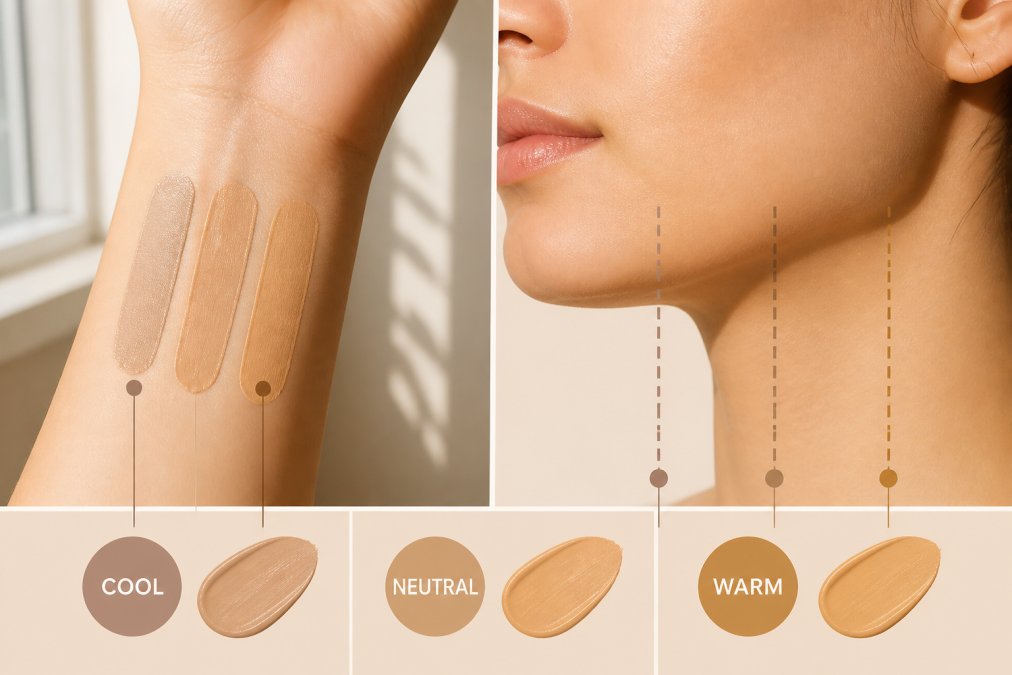
Cool, Warm, and Neutral: Reading Your Complexion
Cool-toned skin has pink, red, or bluish undertones. Cool-toned individuals often find that veins on the inside of the wrist appear blue or purple, and silver jewelry tends to complement their complexion more than gold.
Warm-toned skin has yellow, peachy, or golden undertones. Warm-toned individuals typically see green or olive-tinted veins, and gold jewelry tends to be more flattering.
Neutral-toned skin sits between cool and warm, with a mix of both. Veins may appear blue-green, and both silver and gold jewelry tend to work equally well.
The most common oxidation mistake is choosing a foundation that matches your skin's surface tone while ignoring undertone. A foundation with a warm undertone on a cool complexion will look orange even before oxidation begins, and dramatically more orange afterward.
How to Test Foundation Shades Correctly
Most people test foundation on the back of their hand, which is one of the most reliable ways to pick the wrong shade. The skin on your hand differs in tone, texture, and sebum production from the skin on your face and jawline.
The correct method:
- Apply a small stripe of foundation along your jawline, blending slightly onto your neck
- Step into natural light, away from store lighting or indoor bulbs
- Wait a minimum of 10 minutes before assessing the color
- Check whether the shade disappears into your skin or creates a visible line at the jaw
That 10-minute wait is essential. It gives the formula time to begin interacting with your skin chemistry, which is when early oxidation becomes visible. A shade that looks perfect immediately but shifts within minutes is telling you exactly what it will do all day.
For deeper or complex skin tones, this process is even more critical. Many foundations offer limited depth in their deeper shades, forcing a poor undertone match. Anjelic Beauty's True Tone Technology is specifically designed to address this, with formulas tested across 40+ shades to ensure undertone accuracy at every depth.
Choosing the Right Formula for Your Skin Type
Formula selection is where many people unknowingly set themselves up for oxidation problems.
Oily skin types are most prone to foundation oxidation because sebum production is highest. For oily skin, water-based or silicone-based formulas with a matte finish tend to hold color more consistently by creating a barrier between the skin's sebum and the foundation's pigments.
Dry skin types face a different challenge. Many matte formulas designed for oily skin contain high levels of absorbent powders that can emphasize texture on dry skin. For dry complexions, a dewy finish formula with emollient-rich ingredients tends to perform better, though these formulas require a good primer to reduce direct contact between skin and pigment.
Combination skin requires a targeted approach: a matte or satin formula applied with a damp sponge for better coverage control, with a setting powder concentrated in the T-zone.
Application Tool Impact on Color Stability
The tool you use to apply foundation affects how much air is incorporated into the formula during application, which directly influences early-stage oxidation.
Flat foundation brushes press the formula into the skin with minimal air incorporation, which is the most oxidation-resistant application method. Damp beauty sponges produce a skin-like, blended finish and dilute the formula slightly, which can slow the initial oxidation reaction by reducing pigment concentration at the surface. Fingers introduce the most heat and sebum, accelerating oxidation noticeably on oily skin. Dry sponges or powder puffs are the worst choice for liquid foundation, as they absorb product inconsistently and trap air within the formula layer.
Preventative Steps to Stop Foundation Turning Orange
Prevention is more effective than correction. These steps address oxidation before it starts:
-
Prime your skin first. A silicone-based primer creates a barrier between your skin's surface and the foundation, reducing direct contact between sebum and pigments. This is the single most effective preventative step for oily skin types.
-
Set with a translucent powder immediately after application. Setting powder locks the formula in place and reduces ongoing sebum contact with the foundation layer.
-
Choose formulas with antioxidant actives. Ingredients like tocopherol and ascorbic acid slow the oxidation of iron oxide pigments.
-
Apply in thin layers. Thick application traps more heat and moisture within the formula, accelerating the oxidation reaction.
-
Avoid heavy moisturizers directly before foundation. Rich, oil-heavy moisturizers increase the lipid content at the skin's surface, giving iron oxide pigments more reactive material to interact with.
-
Store your foundation correctly. Cool, dry, and dark storage conditions preserve formula stability between uses.
-
Replace products at the end of their shelf life. An expired formula will oxidize faster and more dramatically than a fresh one.
How to Color Correct Orange Foundation
Sometimes oxidation happens despite your best efforts. Color correction is the practical fix.
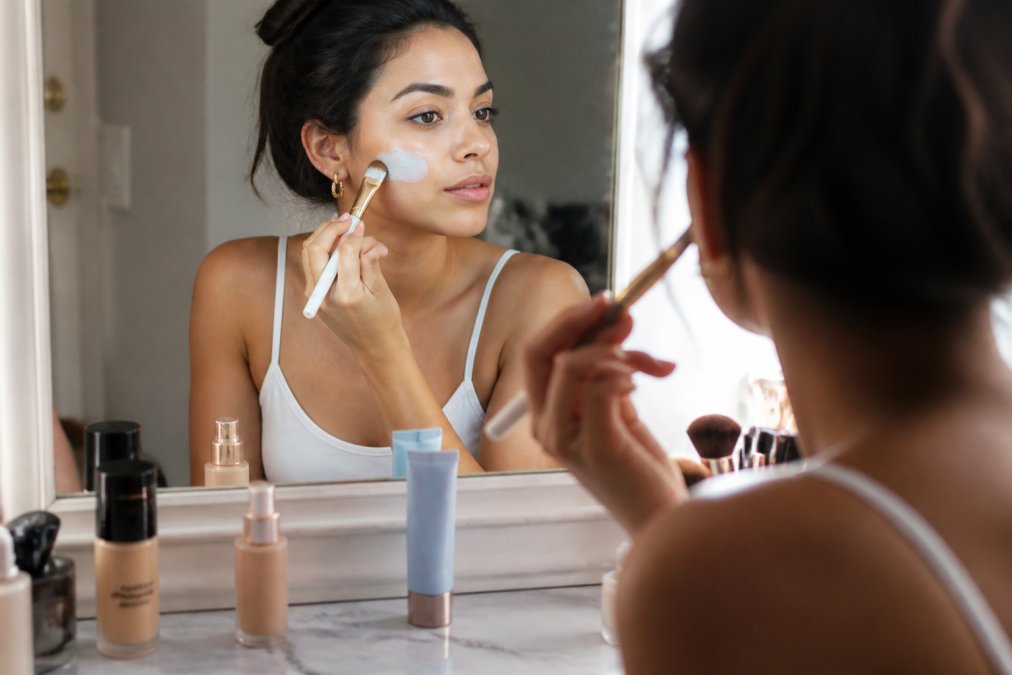
Color theory basics: Orange sits opposite blue on the color wheel. To neutralize orange tones, you need to introduce a blue or blue-violet corrector.
The process for color correcting orange foundation:
- Apply your foundation as usual and allow it to settle for 10 minutes
- Assess where the orange shift is most visible, typically the center of the face and T-zone
- Apply a small amount of blue or lavender color-correcting primer or powder over the affected areas
- Blend outward with a damp sponge using a pressing motion, not circular strokes
- Set with a translucent powder to lock the correction in place
Blue correctors are highly pigmented. Start with the smallest possible amount and build gradually. For deeper skin tones, a lavender corrector often works better than pure blue, as blue can read ashy against darker complexions.
If you are regularly reaching for color correctors to fix an orange shift, that signals your foundation formula, shade match, or application method needs to change. According to Society of Cosmetic Chemists' resources on pigment chemistry, color correction is a compensatory technique, not a substitute for formula compatibility.
Anjelic Beauty's Smart Glam System™ was developed specifically to address this problem. The formulas use pigments engineered for undertone accuracy and formula stability, so the shade you apply is the shade you wear, from morning to night. Real customers have noted that the colors last all day with no smudging and no touch-ups required, which reflects exactly what non-oxidizing formulas should deliver.
Foundation turning orange is a chemistry problem, and chemistry problems have engineering solutions. If your current foundation consistently shifts by midday, the formula is not working with your skin, it is working against it. Anjelic Beauty's True Tone Technology and Smart Glam System™ are built to eliminate that mismatch, with 40+ shades tested across real skin tones to ensure the color you choose is the color that stays. Get yours now and experience foundation that holds its true shade from the first application to the end of your day.
Frequently Asked Questions
What's my undertone if my foundation looks orange?
If foundation consistently pulls orange on your skin, your undertone is most likely warm or neutral-warm. Orange shift usually means the formula's pigments, often iron oxides, are reacting with your skin's natural oils and pH to amplify warm tones. Try a foundation with a neutral or slightly cool-toned base. Testing a shade on your jawline in natural light, and waiting 20-30 minutes before judging, gives you the most accurate read of how it will wear throughout the day.
Does oily skin cause foundation to oxidize faster?
Yes. Oily skin produces more sebum, which is slightly acidic. That excess oil creates a reactive environment where iron oxide pigments in foundation break down faster, causing visible color shift and darkening within hours. Foundation oxidation is more pronounced on oily skin types. Using a mattifying primer, setting powder, and an oil-free or water-based formula can slow this process significantly and help your shade stay true from morning through a full workday.
Can skincare products cause foundation to change color?
Certain skincare products absolutely accelerate foundation oxidation. Vitamin C serums, AHAs, and BHAs alter your skin's surface pH, which changes how pigments behave once foundation is applied on top. Occlusive moisturizers and facial oils also create a barrier that traps heat and speeds up the oxidation reaction. Allow skincare to fully absorb before applying foundation, and choose a primer that creates a stable, neutral surface between your skincare and your foundation formula.
How do I fix foundation that's already turned orange?
For an immediate fix, apply a thin layer of cool-toned or pink-toned color corrector over the oxidized areas, then press a small amount of fresh foundation on top. A light dusting of translucent or lavender-tinted setting powder can also neutralize orange tones without adding heavy coverage. Long-term, switching to a non-oxidizing formula with stable pigments, and prepping skin with a mattifying primer, prevents the color shift before it starts rather than correcting it after the fact.
This article was written using GrandRanker