Free shipping on all orders

Table of Contents
- Why Makeup That Stays On All Day Is Harder Than It Looks
- How to Make Makeup Last All Day: Step-by-Step
- Non-Oxidizing Makeup Products: What to Look For
- Best Setting Spray for Longevity: What Actually Works
- Environmental Factors That Shorten Wear Time
- Common Mistakes That Cause Makeup to Fade or Crease
- Removing Long-Wear Makeup Without Damaging Your Skin
- Conclusion
Last Updated: August 22, 2026
Why Makeup That Stays On All Day Is Harder Than It Looks
According to Fortune Business Insights' U.S. Makeup Market Report, the U.S. makeup market was valued at $7.40 billion in 2024 and is projected to reach $12.77 billion by 2032. This growth reflects consumer demand for better performance, makeup that looks flawless at 8 a.m. but fades by 2 p.m. is a constant frustration.
Making makeup that stays on all day is a genuine formulation challenge. Wear time depends on a layered system: skin prep, formula chemistry, application technique, and environmental conditions. Miss any one, and even expensive foundation will fade, crease, or shift.
Skin Type Is the Variable Most People Ignore
Oily skin produces excess sebum that breaks down pigment adhesion and causes foundation to slide. Dry skin creates patchiness because emollient-heavy formulas cling to flaky texture. Combination skin does both.
Your skin type determines which primer to use, which formula to choose, and how much powder is appropriate. A silicone-based primer works for oily skin by filling pores and creating a barrier against sebum. A hydrating, water-based primer suits dry skin because it doesn't strip the moisture needed to hold pigment evenly. Get this wrong and no setting spray will save you.
How Oxidation Kills Your Shade Match by Noon
Oxidation is the chemical reaction between iron oxide pigments in foundation and oxygen, sebum, and skin pH, causing visible shade shift toward orange or ashy tones over several hours.
This is especially frustrating for customers with deeper or complex undertones: they buy a shade that looks right in the bottle and wrong by lunch. The fix is choosing a formula engineered to resist oxidation. Foundations built with stabilized pigments and film-forming polymers are significantly less prone to shade drift than traditional iron oxide-only formulas.
How to Make Makeup Last All Day: Step-by-Step
Longevity in makeup is not a single product decision. It's a system where each step builds on the last.
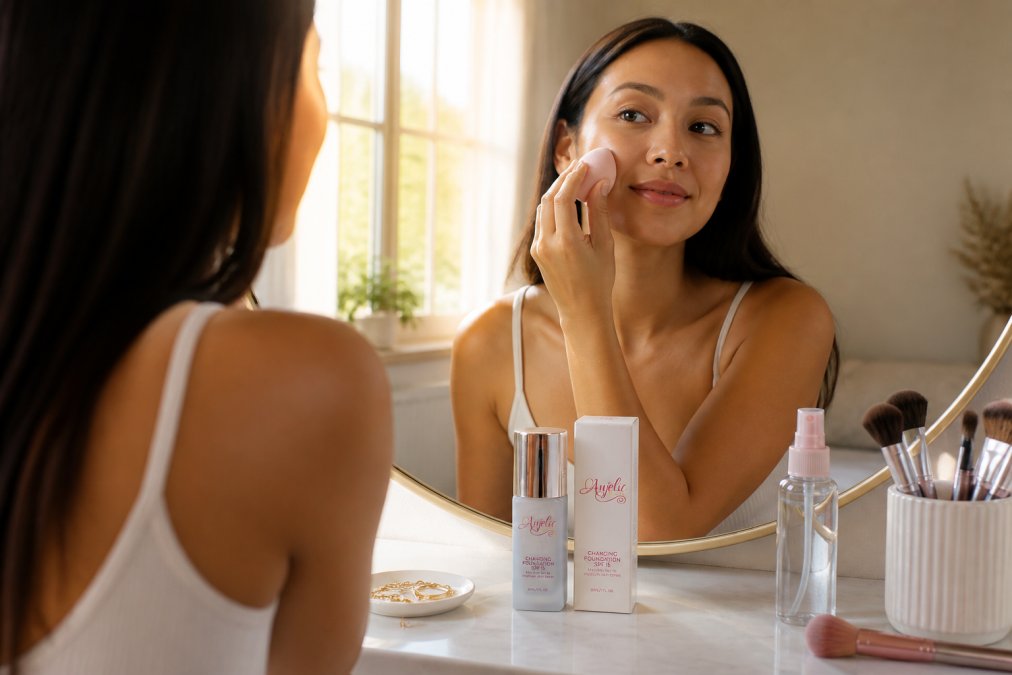
Step 1: Skin Prep and Hydration
Skin prep is the most skipped step and the one with the highest return. Clean, balanced, hydrated skin gives pigment something to grip. Dehydrated skin creates a rough surface where foundation settles unevenly and fades faster.
Start with a lightweight, non-comedogenic moisturizer appropriate for your skin type. For oily skin, use a gel moisturizer that controls sebum without greasiness. For dry skin, use a cream formula with hyaluronic acid or glycerin. Give your moisturizer three to five minutes to absorb before the next step.
Step 2: Primer as Your Tacky Base
Primer is essential for all-day wear. Its job is to create a tacky base that gives foundation something to bond to while addressing your skin's specific challenges.
Silicone-based primers fill pores and fine lines, creating a smooth surface that reduces creasing. Mattifying primers absorb excess oil and extend wear time on oily skin. Hydrating primers add moisture between skincare and makeup, preventing dry skin from drinking up your foundation. Apply primer in thin, even layers, too much creates a slippery surface that actually shortens wear time.
Step 3: Choosing and Applying Long-Wear Foundation
The formula matters as much as technique. Long-wear foundations use film-forming polymers like dimethicone or acrylates copolymer, which create a flexible layer on skin and resist breakdown from sebum and humidity.
For application, buffing foundation into the skin with a brush creates a denser, more transfer-proof finish. Dabbing with a damp sponge gives a natural, skin-like finish with buildable layers. Avoid dragging or wiping motions, which disturb the film-forming layer before it sets.
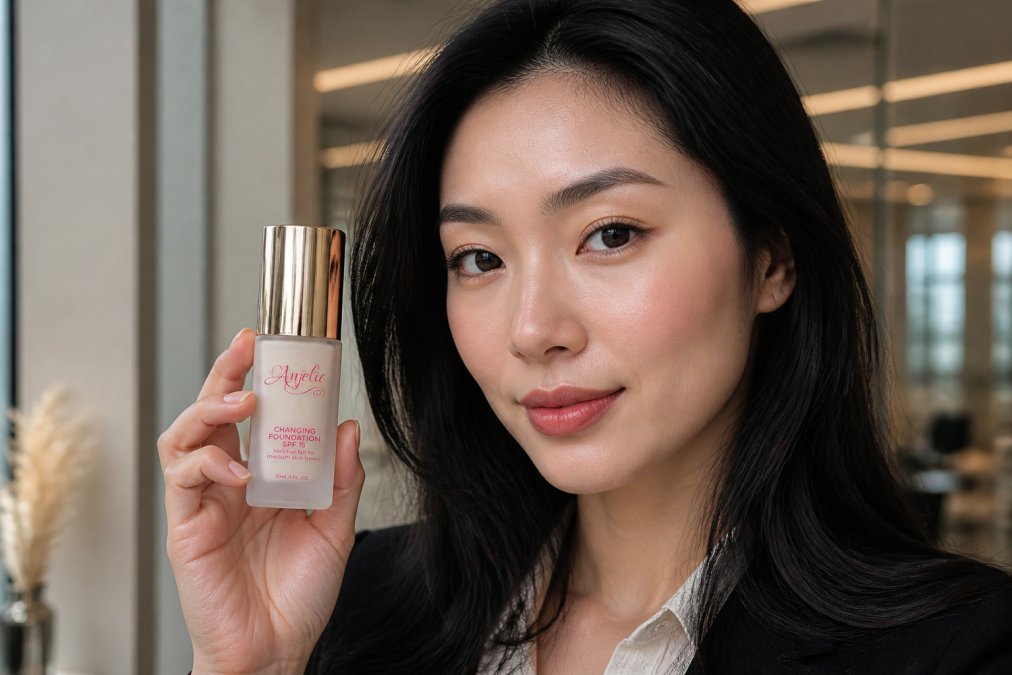
The Anjelic Beauty AuraAlign™ Liquid Changing Foundation was built specifically around this challenge. Its True Tone Technology uses stabilized pigments that resist oxidation, so the shade you apply at 7 a.m. is the shade you see at 7 p.m. Tested across 40+ tones, it's engineered to address shade shift for deeper and complex undertones at $40.

Step 4: Setting with Translucent Powder and Spray
Setting is where most routines fall apart, either from skipping it entirely or overdoing it.
Translucent powder pressed lightly over foundation absorbs excess oil and locks the base in place. Focus on the T-zone for oily skin and use a light hand on dry skin to avoid a chalky finish. Baking, pressing powder under the eyes and letting it sit for several minutes before dusting off, extends wear time in high-movement areas.
Setting spray is the final seal. A good setting spray melts powder into foundation, creating a unified, skin-like finish that resists humidity and transfer. According to market analysis from Decisions Advisors, the setting spray market is projected to grow from $1.09 billion in 2026 to $1.95 billion by 2034, reflecting how central this step has become to modern routines.
Non-Oxidizing Makeup Products: What to Look For
Non-oxidizing makeup products are formulas specifically engineered to prevent the pigment-to-oxygen reaction that causes shade shift.
Ingredients That Prevent Shade Shift
Look for these markers when evaluating foundation formulas:
- Film-forming polymers (dimethicone, acrylates copolymer): Create a flexible barrier that limits oxygen exposure to pigment
- Stabilized iron oxides: Coated pigments that resist chemical reaction with sebum and skin pH
- Antioxidants (vitamin C derivatives, vitamin E, niacinamide): Neutralize free radicals that accelerate oxidation
- Silica: Absorbs excess oil without over-drying, reducing the sebum that triggers shade shift
Avoid foundations with high concentrations of unstabilized iron oxides and heavy emollients if oxidation is your primary concern.
What 'Skinification' Means for Long-Wear Formulas
Skinification is the integration of skincare-grade actives into color cosmetics. According to Forbes' analysis of the skinification trend, skinification is predicted to grow 25% year on year. Practically, this means foundations now include hyaluronic acid for hydration, niacinamide for oil control, and peptides for skin support. Research from The NPD Group's study on makeup with skincare benefits found that 90% of women surveyed reported using makeup with skincare benefits, and 62% specifically sought moisturizing properties in their base products.
The tradeoff: some skincare actives can slightly reduce transfer-proof performance. The best long-wear skinification products balance actives with film-forming technology so neither benefit is sacrificed.
Best Setting Spray for Longevity: What Actually Works
The best setting spray bonds makeup layers together rather than simply sitting on top. Most setting sprays work through alcohol-based formulas that evaporate quickly and contract makeup into the skin, or glycerin-based formulas that add light moisture to prevent dry-down crease. For oily skin, a formula with oil-control ingredients like witch hazel extends mattifying performance. For dry skin, a hydrating setting spray prevents the tight, cakey feeling that develops over long wear.
Hold the bottle 8-10 inches from the face and mist in an X and T pattern. One or two passes is enough, over-applying reactivates powder and can cause pilling.
| Skin Type | Best Setting Spray Formula | Key Benefit |
|---|---|---|
| Oily | Alcohol + witch hazel base | Oil control, matte finish |
| Dry | Glycerin + hydrating actives | Prevents crease, adds dewiness |
| Combination | Lightweight water-based | Balances without over-drying |
| Sensitive | Fragrance-free, minimal actives | Reduces irritation risk |
Environmental Factors That Shorten Wear Time
Humidity is the biggest external threat to makeup longevity. High moisture in the air hydrates the skin surface, softening the film-forming layer in foundation and allowing pigment to migrate. This is why the same foundation lasts 12 hours in a dry climate but only 6 in a humid one.
Heat accelerates sebum production, which breaks down pigment adhesion. Air conditioning dries the skin, causing emollient-heavy foundations to absorb unevenly and look patchy by afternoon.
Friction is underestimated. Touching your face, wearing a mask, or resting your chin on your hand removes foundation faster than chemical breakdown. Transfer-proof formulas use higher concentrations of film-forming polymers to resist mechanical removal, but they can't overcome constant physical contact.
Adjust your routine seasonally. In summer, increase oil-control steps (mattifying primer, more powder, oil-control setting spray). In winter, prioritize hydration at every layer to prevent dry-skin patchiness.
Common Mistakes That Cause Makeup to Fade or Crease
The most common reason makeup fails has nothing to do with the products, it's the application.
- Skipping primer: Foundation applied directly to moisturizer has nothing to bond to. Wear time drops significantly.
- Applying too many layers too quickly: Each layer needs time to set before the next goes on. Rushing creates a thick, unstable film that creases.
- Over-powdering dry areas: Translucent powder on dry cheeks or forehead creates a chalky, aged finish that worsens as the day progresses.
- Using the wrong moisturizer: Heavy, occlusive moisturizers prevent foundation from bonding to skin. A lightweight, fast-absorbing formula is better.
- Skipping setting spray: Powder alone doesn't seal makeup. Without it, layers remain separate and break down independently.
- Touching your face: The fastest way to remove foundation, regardless of formula.
According to The Benchmarking Company's January 2025 beauty habits study, only 10% of makeup wearers reapply throughout the day, which means most people need their initial application to hold for 8-12 hours.
Removing Long-Wear Makeup Without Damaging Your Skin
Long-wear formulas are engineered to resist removal, which is exactly what you want during the day and the opposite of what you want at night.
Film-forming polymers require an oil-based or micellar cleanser to break down properly. Water alone won't dissolve the polymer layer. Scrubbing harder to compensate damages the skin barrier and contributes to irritation that makes the next morning's application look worse.
The right removal sequence:
- Apply an oil-based cleanser or micellar water to dry skin
- Massage gently in circular motions for 30-60 seconds to dissolve the film-forming layer
- Rinse with lukewarm water
- Follow with a gentle water-based cleanser to remove residue
- Apply moisturizer immediately after to restore the skin barrier
This double-cleanse method is particularly important for long-wear foundations and waterproof eye products. Leaving film-forming polymers on skin overnight clogs pores and can cause breakouts and dullness.
The Anjelic Beauty Midnight Blush Matte Lip Kit and Runway Ruby Matte Lip Kit are formulated to deliver lasting color without the drying effect that makes most long-wear lip products difficult to remove. Customers have noted: "I love the kit! I really appreciate how they don't dry out your lips like a lot of other liquid lipsticks do."


| Long-Wear Product Type | Recommended Remover | Key Step |
|---|---|---|
| Full-coverage foundation | Oil-based cleanser | Massage on dry skin first |
| Waterproof mascara | Micellar water or oil | Hold pad on lashes 10 seconds |
| Transfer-proof lip color | Oil-based balm or cleanser | Avoid rubbing dry |
| Setting spray-sealed base | Double cleanse method | Water-based cleanser second |
Keeping your complexion intact for a 10-hour day is a systems problem, not a product problem. The right skin prep, a primer matched to your skin type, a non-oxidizing formula, and a proper setting routine work together in a way that no single product can replicate alone. Anjelic Beauty's Smart Glam System™ was built around exactly this challenge: True Tone Technology that resists shade shift, skincare-grade actives that support your skin through the day, and vegan formulas tested across 40+ tones so the color you choose actually performs on your skin. Get yours now and see what makeup that stays on all day actually feels like.
Frequently Asked Questions
What is the best foundation that lasts all day?
The best all-day foundations combine silicone-based film formers for pigment adhesion, oil-control ingredients to manage sebum, and non-oxidizing pigments that hold their shade from morning to night. Anjelic Beauty's AuraAlign™ Liquid Changing Foundation ($40) is built on the Smart Glam System™, which pairs skincare-grade actives with True Tone Technology to prevent shade shift. Across 40+ shades, it delivers buildable coverage and a flawless finish without creasing or fading through a full workday.
Does setting spray actually make makeup last longer?
Yes, when used correctly. A setting spray bonds the layers of your makeup together and forms a film that resists humidity, sweat, and transfer. The global setting spray market is projected to grow from $1.09 billion in 2026 to nearly $1.95 billion by 2034, reflecting how widely consumers rely on it for wear-time. For best results, hold the bottle 8-10 inches from your face and mist in an X-then-T motion after applying translucent powder. Let it dry naturally rather than fanning it.
How do you stop foundation from oxidizing and turning orange?
Oxidation happens when iron-oxide pigments in a formula react with sebum and air exposure, shifting the shade warmer. To prevent it, choose a foundation labeled non-oxidizing with stabilized pigments, apply a mattifying primer to reduce sebum contact, and set immediately with translucent powder. Anjelic Beauty's True Tone Technology is specifically engineered to prevent this color shift, which is one of the most common complaints from women with deeper or warm-toned complexions who buy foundation online.
What is the best product to keep makeup on all day?
No single product does it alone. Long wear-time comes from a system: a hydrating skin prep routine, a silicone-based or mattifying primer as a tacky base, a transfer-proof or waterproof foundation in buildable layers, translucent powder to lock it in, and a setting spray for longevity as the final seal. According to a 2025 survey, 54% of beauty consumers rank long-wear performance as their top priority when choosing a foundation, confirming that the full layering routine matters more than any one product.
This article was written using GrandRanker