Free shipping on all orders
Table of Contents
- Why Ingredients to Avoid in Vegan Makeup Matter
- Common Animal-Derived Ingredients to Avoid
- Hidden Animal Ingredients in Cosmetics You Might Miss
- Harmful Chemicals vs. Animal-Derived Ingredients
- How to Identify Vegan Makeup Labels and Certifications
- Cruelty-Free vs. Vegan Makeup: Understanding the Difference
- Plant-Based Alternatives and Synthetic Vegan Ingredients
- Building Your Ingredient-Conscious Makeup Routine
Last Updated: August 30, 2026
Why Ingredients to Avoid in Vegan Makeup Matter
The average adult uses 12 personal care products daily, which could contain 112 unique chemical ingredients, some of which may pose health risks (Morning Consult, 2023) (morningconsult.com). Most people don't read ingredient labels, or if they do, they don't understand what they're reading. At Anjelic Beauty, we believe transparency matters. Knowing which ingredients to avoid in vegan makeup isn't just about ethics; it's about making informed choices for your skin and your values.
The vegan cosmetics market in the United States reached $3.95 billion in 2024 and is projected to grow to $5.78 billion by 2030, with a compound annual growth rate of 6.55% (TechSci Research, 2025). This growth reflects a real shift: 78% of Americans are concerned about ingredient safety in cosmetics, and 57% have actively avoided certain products due to harmful ingredient concerns (YouGov Surveys, 2026) (yougov.com).
Here's what most guides get wrong: vegan doesn't automatically mean safe. A product can be vegan and still contain synthetic chemicals that irritate skin or disrupt hormones. The real skill is understanding the difference and knowing which ingredients to avoid in vegan makeup specifically. Below, we'll show you how to decode labels, identify hidden animal ingredients, and build a routine that aligns with both your values and your skin's needs.
Common Animal-Derived Ingredients to Avoid
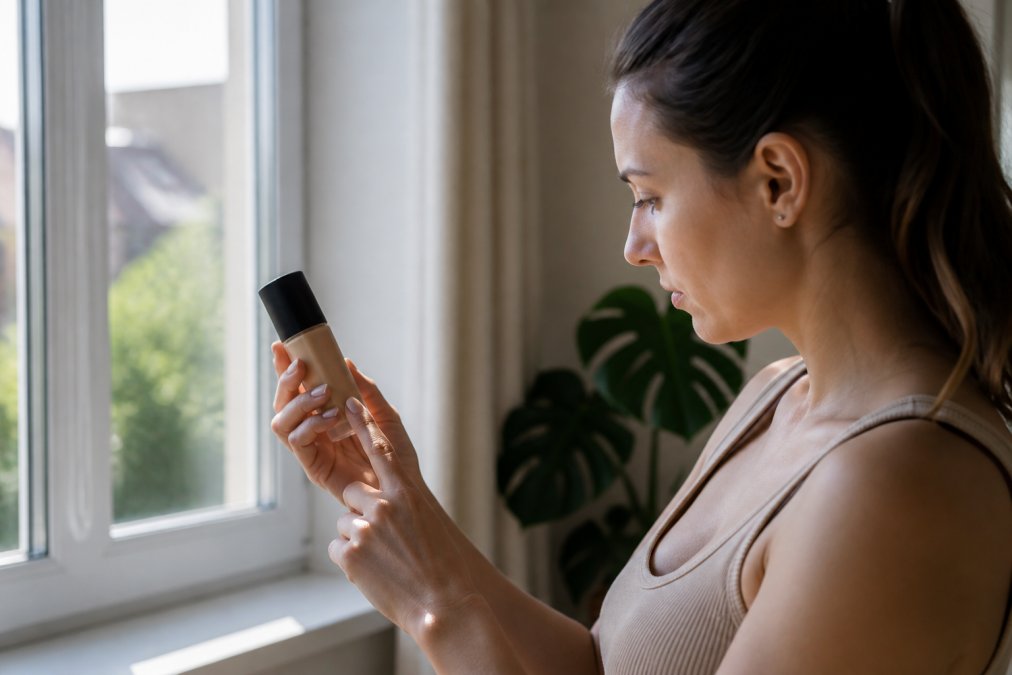
Animal-derived ingredients appear in makeup under names most people don't recognize. Learning to spot them is the first step toward truly vegan cosmetics.
Direct Animal By-Products
Lanolin is derived from sheep's wool and appears in lip balms, foundations, and moisturizing primers. It's not vegan and can trigger allergies in sensitive skin.
Beeswax serves as a thickener and emollient in lip products, mascaras, and cream shadows. It comes directly from honeybee colonies, making it off-limits for vegans. Brands like Glossier initially reformulated its bestselling Balm Dotcom to replace beeswax with synthetic alternatives, but faced consumer backlash and reverted to the original formula in 2024.
Carmine (also called cochineal or crimson lake) is a red pigment made by crushing female cochineal insects. It appears in blushes, lipsticks, and eyeshadows and is one of the most ethically problematic ingredients in cosmetics.
Gelatin is derived from animal bones and skin and used as a binder in some pressed powders and cream formulations.
Collagen and keratin are proteins extracted from animal sources and appear in mascaras, foundations, and primers. Plant-based alternatives like soy protein and wheat protein are now widely available.
Shellac is secreted by the lac beetle and used as a glazing agent in some eyeshadows and nail products.
Insect-Derived Ingredients
Honey and royal jelly come from bees and appear in "nourishing" formulas. While bees aren't harmed in extraction, many strict vegans avoid them. Propolis, a resinous substance bees create to seal hives, is marketed as an antioxidant in serums and primers.
Fish and Marine By-Products
Squalene traditionally comes from shark liver oil, though plant-based squalene from olives is now standard. If a product doesn't specify "plant-derived squalene," assume it's from sharks. Fish collagen and fish elastin appear in some high-end foundations and primers, extracted from fish scales and skin.
Hidden Animal Ingredients in Cosmetics You Might Miss
Some animal-derived ingredients hide behind chemical names that don't immediately signal their origin.
Stearic acid, cetyl alcohol, and cetearyl alcohol can be derived from either plants or animals. If a brand doesn't explicitly state "plant-derived," assume it could be animal-sourced. L'Oréal Paris reformulated its True Match Super-Blendable Foundation to be vegan, alcohol-free, oil-free, and fragrance-free, demonstrating that major brands can commit to transparent sourcing (Modern Retail, 2023).
Glycerin can be plant-derived from vegetable oils or animal-derived from animal fats. Look for "vegetable glycerin" or "plant-derived glycerin" on the label.
Retinyl palmitate is a form of vitamin A sometimes derived from fish. Vegan alternatives like bakuchiol and rosehip seed oil deliver similar anti-aging benefits.
Pearl powder involves harvesting from oysters, which some vegans avoid. Synthetic mica is the vegan alternative.
A pro tip: ingredients ending in "-yl," "-ate," or "-one" are often synthetic or animal-derived, while plant-derived ingredients typically have recognizable botanical names. This quick scan can help you filter suspicious formulations.
Harmful Chemicals vs. Animal-Derived Ingredients
A critical distinction most people miss: avoiding animal ingredients doesn't automatically mean avoiding harmful chemicals. A product can be 100% vegan and still contain parabens, sulfates, phthalates, or other synthetic compounds that irritate skin or disrupt hormones.
Parabens (methylparaben, propylparaben, butylparaben) are vegan preservatives but have been linked to hormone disruption. Sulfates (sodium lauryl sulfate, sodium laureth sulfate) are typically vegan but can strip natural oils and irritate sensitive skin.
Phthalates are synthetic plasticizers used to make fragrances last longer. They're vegan but have been banned in the EU and are being phased out in the U.S. due to reproductive health concerns. The U.S. has not yet banned phthalates in cosmetics, though the FDA continues to monitor their safety.
Polyethylene glycol (PEG) and propylene glycol are synthetic humectants that can irritate sensitive skin. BHA and BHT are synthetic antioxidants linked to endocrine disruption and banned in the EU.
The real insight: vegan makeup can be clean, and clean makeup can be non-vegan. The best approach is seeking products that are both vegan and free from synthetic chemicals that trigger sensitivity or health concerns. Anjelic Beauty combines vegan formulations with skincare-grade actives, ensuring you're avoiding both animal ingredients and unnecessary synthetic irritants.
How to Identify Vegan Makeup Labels and Certifications
Not all "vegan" claims are equal. Some brands self-label without third-party verification, while others carry recognized certifications that guarantee their claims.
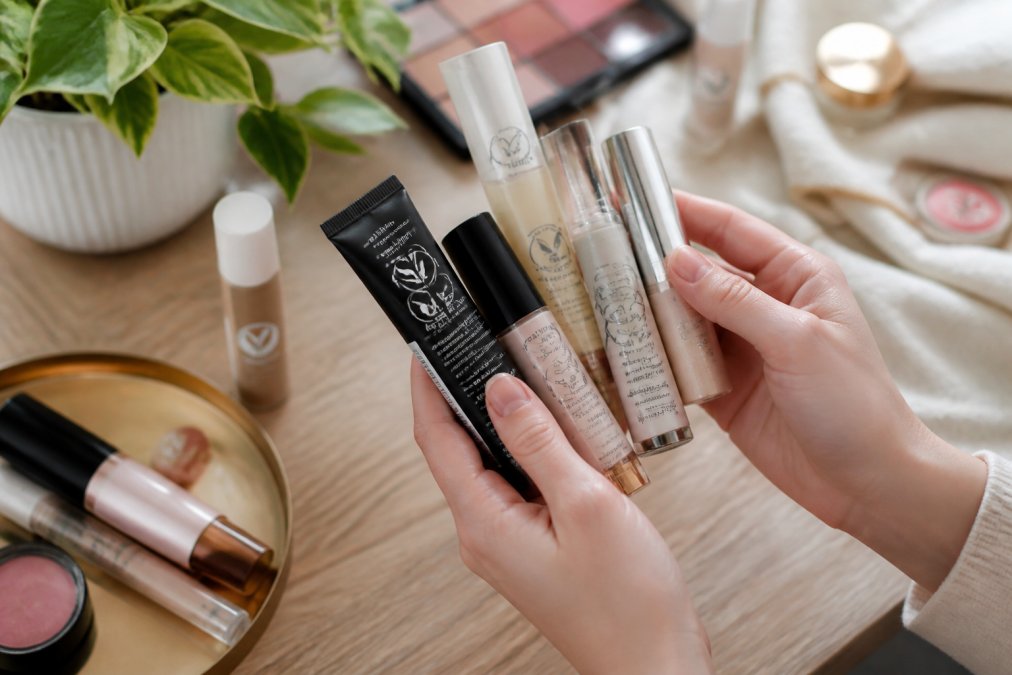
PETA Certified is the gold standard for vegan verification. PETA's Beauty Without Bunnies program certifies that a product contains no animal-derived ingredients and was not tested on animals. Look for the bunny logo on packaging.
Leaping Bunny certification means the product was not tested on animals, though it doesn't guarantee vegan status.
V-Label is a European certification for vegan products, increasingly recognized in the U.S.
Clean at Sephora is Sephora's internal standard that excludes certain chemicals, though it doesn't guarantee vegan status. Haus Labs, Lady Gaga's beauty brand, removed 2,700 "questionable" ingredients when it relaunched last year, possibly to comply with the Clean at Sephora standard (Modern Retail, 2023).
Here's the problem: 55% of American women wrongly assume the FDA regulates cosmetic ingredients (Mesothelioma Center, 2025). The FDA doesn't pre-approve cosmetic ingredients the way it does drugs. This means "vegan" claims are largely unregulated unless backed by third-party certification. Only 9% of Americans completely trust voluntary labels (NSF, 2025).
What to look for on the label:
- Third-party certification logos (PETA, Leaping Bunny, V-Label)
- "Plant-derived" or "plant-based" language for ambiguous ingredients
- A QR code linking to full ingredient sourcing
- Explicit statements like "No animal-derived ingredients" or "100% vegan formula"
- Avoid vague claims like "natural" or "clean" without certification
Cruelty-Free vs. Vegan Makeup: Understanding the Difference
Cruelty-free and vegan are not synonyms, and conflating them can lead to buying products that don't align with your values.
Cruelty-free means the finished product was not tested on animals. It doesn't say anything about the ingredients themselves. A cruelty-free product can contain lanolin, beeswax, carmine, or any other animal-derived ingredient.
Vegan means the product contains no animal-derived ingredients. It says nothing about testing.
Both cruelty-free and vegan is the ideal. It means no animal testing and no animal-derived ingredients. This is what most ethical consumers are actually seeking.
When evaluating a brand's ethics, look for both certifications. If a brand claims to be ethical but only carries one certification, ask why. The answer often reveals their priorities.
Plant-Based Alternatives and Synthetic Vegan Ingredients
The innovation in vegan beauty isn't just about removing animal ingredients, it's about replacing them with effective alternatives.
Plant-based alternatives come from botanical sources and often deliver additional skincare benefits. Bakuchiol mimics retinol's anti-aging effects without sensitivity. Rosehip seed oil provides vitamin A naturally. Plant-derived squalene from olives offers hydration without shark exploitation.
Synthetic vegan ingredients are lab-created and don't come from animals or plants. Synthetic beeswax performs identically to real beeswax. Synthetic carmine delivers the same red pigment as crushed insects.
Here's the tension: synthetic ingredients sound "chemical," but they're often more sustainable and ethical than plant-based alternatives. Growing enough botanical actives to replace animal ingredients globally requires significant land use and water consumption. Some synthetic alternatives are actually the greener choice.
The best vegan formulations blend both. They use plant-based actives for their added skincare benefits and synthetic stabilizers for safety and shelf stability. Anjelic Beauty employs this hybrid approach with its Smart Glam System™, combining plant-derived pigments and actives with vegan synthetic binders.
Building Your Ingredient-Conscious Makeup Routine
Now that you understand what to avoid, how do you actually build a routine that works for your skin and your values?
Step 1: Audit your current products. Pull out everything you own and scan the ingredient lists. Use a vegan ingredient checker app or website to identify any animal-derived ingredients.
Step 2: Identify your non-negotiables. Are you avoiding all animal-derived ingredients, or just certain ones like carmine? Do you want to avoid synthetic chemicals too? Your answer determines which products you replace first.
Step 3: Replace strategically. Start with the products you use daily and that sit longest on your skin (foundation, concealer, primer).
Step 4: Read every label. Ingredients ending in "-yl" or "-ate" warrant a second look. If you can't pronounce an ingredient, research it.
Step 5: Test for compatibility. Even vegan products can irritate sensitive skin. Patch test new formulas on your inner arm or behind your ear for 24 hours before applying to your face.
| Step | Action | Time | Frequency |
|---|---|---|---|
| Audit | Review current products for animal ingredients | 20 minutes | Once, then quarterly |
| Identify | Clarify your personal vegan/clean priorities | 10 minutes | Once |
| Replace | Swap out daily-use products first | Ongoing | As products run out |
| Read | Check ingredient lists for suspicious names | 30 seconds per product | Every purchase |
| Test | Patch test new formulas before full application | 24 hours | Per new product |
Anjelic Beauty's HeavenLift™ Mascara ($22.00) is a solid entry point for ingredient-conscious shoppers. It's 100% vegan, non-toxic, and cruelty-free. For foundation, Anjelic Beauty's AuraAlign™ Liquid Changing Foundation ($40.00) adapts to fair to medium skin tones with SPF 15 protection and contains zero animal-derived ingredients. The Midnight Blush Matte Lip Kit ($24.00) pairs a vegan liquid lipstick with a precision lip liner. These three products cover your essential base and demonstrate how vegan formulations can perform at the level of conventional makeup.

Building an ingredient-conscious routine takes intentionality, but the payoff is significant. You're not just avoiding ingredients that conflict with your ethics, you're choosing formulations engineered for performance and skin health. The vegan beauty market's 6.55% annual growth is driven by consumers who've decided that transparency and ethics matter. Once you start reading labels, you can't unsee the difference. That awareness is the first step toward makeup that aligns with who you actually are.
=== FAQ ANSWERS (audit these too, same rules) ===
[1] Q: What makes makeup not vegan? A: Makeup is not vegan when it contains animal-derived ingredients or by-products. Common non-vegan ingredients include beeswax, lanolin (from sheep's wool), carmine (crushed insects), collagen, keratin, gelatin, and shark-derived squalene. Additionally, if a product was tested on animals, it fails the vegan standard regardless of its ingredients. The Mesothelioma Center reports that 55% of American women incorrectly assume the FDA regulates cosmetic ingredients, making label reading critical.
[2] Q: How can I verify if a makeup brand is truly vegan? A: Check for third-party certifications from organizations like PETA, Leaping Bunny, or V-Label, which verify both vegan ingredients and cruelty-free practices. Read the full ingredient list and look for animal-derived terms like lanolin, beeswax, carmine, collagen, keratin, and squalene. Contact the brand directly to confirm their sourcing and testing practices. Be cautious of brands that claim vegan status without certification; only 9% of Americans completely trust voluntary labels, according to NSF research. Anjelic Beauty's products are 100% vegan and cruelty-free, with transparent ingredient sourcing across our entire range.
[3] Q: What's the difference between cruelty-free and vegan makeup? A: Vegan makeup contains no animal-derived ingredients, while cruelty-free makeup is not tested on animals but may contain animal by-products like beeswax or lanolin. A product can be cruelty-free but not vegan, or theoretically vegan but not cruelty-free if made with synthetic alternatives but tested on animals. The best products are both vegan and cruelty-free, ensuring no animal ingredients and no animal testing. Look for dual certifications to confirm both standards are met.
[4] Q: Are ingredients ending in '-yl' or '-ate' always animal-derived? A: Not necessarily. While many animal-derived ingredients end in '-yl,' '-ate,' or '-one' (like cetyl alcohol or stearic acid), these can be derived from plants, animals, or synthesized in labs. Glycerin, stearic acid, cetyl alcohol, and cetearyl alcohol are common examples that can come from either source. Always check the ingredient source on the label or contact the brand. Look for explicit terms like 'plant-derived glycerin' or 'vegetable glycerin' to confirm the origin. Recognizable botanical names like rosehip, jojoba, and argan oil are typically plant-based.
Frequently Asked Questions
Q: What makes makeup not vegan?
A: Makeup is not vegan when it contains animal-derived ingredients or by-products. Common non-vegan ingredients include beeswax, lanolin (from sheep's wool), carmine (crushed insects), collagen, keratin, gelatin, and shark-derived squalene. Additionally, if a product was tested on animals, it fails the vegan standard regardless of its ingredients. The Mesothelioma Center reports that 55% of American women incorrectly assume the FDA regulates cosmetic ingredients, making label reading critical.
Q: How can I verify if a makeup brand is truly vegan?
A: Check for third-party certifications from organizations like PETA, Leaping Bunny, or V-Label, which verify both vegan ingredients and cruelty-free practices. Read the full ingredient list and look for animal-derived terms like lanolin, beeswax, carmine, collagen, keratin, and squalene. Contact the brand directly to confirm their sourcing and testing practices. Be cautious of brands that claim vegan status without certification; only 9% of Americans completely trust voluntary labels, according to NSF research. Anjelic Beauty's products are 100% vegan and cruelty-free, with transparent ingredient sourcing across our entire range.
Q: What's the difference between cruelty-free and vegan makeup?
A: Vegan makeup contains no animal-derived ingredients, while cruelty-free makeup is not tested on animals but may contain animal by-products like beeswax or lanolin. A product can be cruelty-free but not vegan, or theoretically vegan but not cruelty-free if made with synthetic alternatives but tested on animals. The best products are both vegan and cruelty-free, ensuring no animal ingredients and no animal testing. Look for dual certifications to confirm both standards are met.
Q: Are ingredients ending in '-yl' or '-ate' always animal-derived?
A: Not necessarily. While many animal-derived ingredients end in '-yl,' '-ate,' or '-one' (like cetyl alcohol or stearic acid), these can be derived from plants, animals, or synthesized in labs. Glycerin, stearic acid, cetyl alcohol, and cetearyl alcohol are common examples that can come from either source. Always check the ingredient source on the label or contact the brand. Look for explicit terms like 'plant-derived glycerin' or 'vegetable glycerin' to confirm the origin. Recognizable botanical names like rosehip, jojoba, and argan oil are typically plant-based.
This article was written using GrandRanker