Free shipping + Free gift
Table of Contents
- Why Vegan Makeup for Sensitive Skin Actually Works
- Clean Beauty Ingredients to Avoid for Sensitive Skin
- Best Non-Comedogenic Vegan Foundation for Reactive Skin
- Top Vegan Makeup for Sensitive Skin: Product Picks by Category
- Budget vs. Higher-End Vegan Makeup: What You Actually Get
- Your Daily Sensitive Skin Makeup Routine, Step by Step
- Conclusion
Last Updated: August 23, 2026
The vegan cosmetics market is expected to grow from $19.5 billion in 2025 to $21.29 billion in 2026 at a compound annual growth rate of 9.2%, according to the Vegan Cosmetics Market Report 2026. That growth is driven by people with reactive, sensitive skin who need formulas that don't cause flare-ups, clog pores, or fade by noon. At Anjelic Beauty, we've learned that sensitive skin doesn't just need fewer ingredients, it needs smarter ones. This guide breaks down what makes vegan makeup for sensitive skin work, which ingredients to avoid, and which products deliver all-day comfort without compromise.
Why Vegan Makeup for Sensitive Skin Actually Works
Vegan makeup for sensitive skin is formulated without animal-derived ingredients like beeswax, lanolin, carmine, or collagen, and never tested on animals. It relies instead on plant-based alternatives that are lighter on the skin barrier.
Botanical extracts like aloe vera, green tea, and chamomile carry natural soothing agents and antioxidants that actively calm inflammation. Shea butter and jojoba oil mimic the skin's own lipids, making them less likely to trigger an immune response. According to Mintel's Global Beauty Trends Report, 45% of consumers believe vegan beauty products are better for their health, a perception increasingly backed by formulation science. Plant-based actives like bakuchiol, squalane, and fermented botanicals are now clinically validated ingredients.
"Consumers today are extremely well-informed, enlightened shoppers. They want to engage with companies that align with their own values, and many refuse to consider purchasing from brands that unnecessarily cause harm to animals or the planet. That is why we're seeing a bigger demand for vegan products." -- Dionne Lois Cullen, Vice President of Brand at DECIEM (Forbes, 2021)
What Makes a Formula Truly Vegan and Cruelty-Free
A product is vegan when it contains zero animal-derived ingredients. It is cruelty-free when neither the finished product nor any of its ingredients were tested on animals. These are two separate standards, a formula can be cruelty-free but still contain beeswax, making it non-vegan.
Third-party certification is the only reliable way to verify either claim. Look for:
- Leaping Bunny certification (administered by Cruelty Free International)
- PETA's Beauty Without Bunnies program
- Certified Vegan logo from Vegan Action
Without one of these, "vegan" and "cruelty-free" on a label are unregulated marketing claims. The FDA does not define or regulate these terms.
The Honest Caveat: Vegan Does Not Automatically Mean Gentle
A product can be 100% vegan and still irritate sensitive skin. Synthetic fragrances, essential oils, alcohol denat, and certain plant extracts are common irritants found in many vegan formulas. The standard to hold vegan makeup to isn't "is it plant-based?" It's "is it formulated for reactive skin?"
Clean Beauty Ingredients to Avoid for Sensitive Skin
Fragrance (listed as "parfum" or "fragrance"): The single most common contact allergen in cosmetics. Fragrance-free is non-negotiable for reactive skin.
Essential oils: Lavender, tea tree, peppermint, and citrus oils are botanical but among the most documented skin irritants, disrupting the skin barrier at concentrations commonly used in cosmetics.
Alcohol denat (denatured alcohol): Dries and strips the skin barrier over time, often used in foundations and setting sprays.
Synthetic dyes (CI numbers): Artificial colorants can cause contact dermatitis. Mineral-based pigments are safer.
Sulfates (SLS, SLES): Highly effective at removing oils, including the protective ones your skin barrier needs.
Parabens: While research is nuanced, many people with sensitive skin report reactivity to them.
Ingredient Interaction: When Two 'Safe' Ingredients Cause Problems Together
Two individually well-tolerated ingredients can become problematic in combination. Niacinamide and vitamin C (ascorbic acid) together at high concentrations can form niacin, which causes flushing and redness. Another pairing to watch: retinol and alpha hydroxy acids (AHAs) can raise skin's photosensitivity and compromise the barrier.
Patch test every new product individually before layering, and introduce one new formula at a time. Give each product at least 72 hours before adding the next.
Best Non-Comedogenic Vegan Foundation for Reactive Skin
The best non-comedogenic vegan foundation for reactive skin skips pore-blocking silicones, synthetic dyes, and fragrance while delivering buildable coverage that doesn't oxidize or shift color throughout the day.
Non-comedogenic means the formula is designed not to clog pores, critical for acne-prone and sensitive skin. Look for foundations built on mineral-based pigments, lightweight oils like jojoba or squalane, and no heavy waxes.
Anjelic Beauty's AuraAlign™ Liquid Changing Foundation ($40) was built around these requirements. It adapts to fair to medium skin tones, delivers a natural finish with SPF 15 built in, and blends effortlessly without the heavy silicone base that causes oxidation and midday color shift. The formula is 100% vegan, non-toxic, and cruelty-free. One customer noted: "These colors are amazing. They last all day, no smudging, no touch-ups. Perfect."

How to Read Labels and Certifications Before You Buy
- Check the first five ingredients. Water, aloe, glycerin, and plant oils in the top five are good signs. Fragrance or alcohol in the top five is a red flag.
- Search for Leaping Bunny or Certified Vegan logos. If neither appears, the claims are self-certified.
- Look for "fragrance-free" not "unscented." Unscented products can contain masking fragrances.
- Scan for CI color codes. CI 77891 (titanium dioxide) and CI 77491 (iron oxide) are mineral-based and generally well-tolerated.
- Check for "non-comedogenic" and "dermatologist-tested." These usually indicate external review.
- Use EWG's Skin Deep database to cross-reference individual ingredients for known sensitizers.
Top Vegan Makeup for Sensitive Skin: Product Picks by Category
The strongest vegan makeup routines for sensitive skin are built category by category, choosing each product for what it doesn't contain as much as what it does.
Eyes: Mascara and Liner That Won't Irritate
Eye products are the highest-risk category for sensitive skin. The eye area has thinner skin, fewer sebaceous glands, and direct proximity to mucous membranes. Formulas with synthetic dyes, fragrance, or fiber extensions can cause redness, swelling, and contact dermatitis.
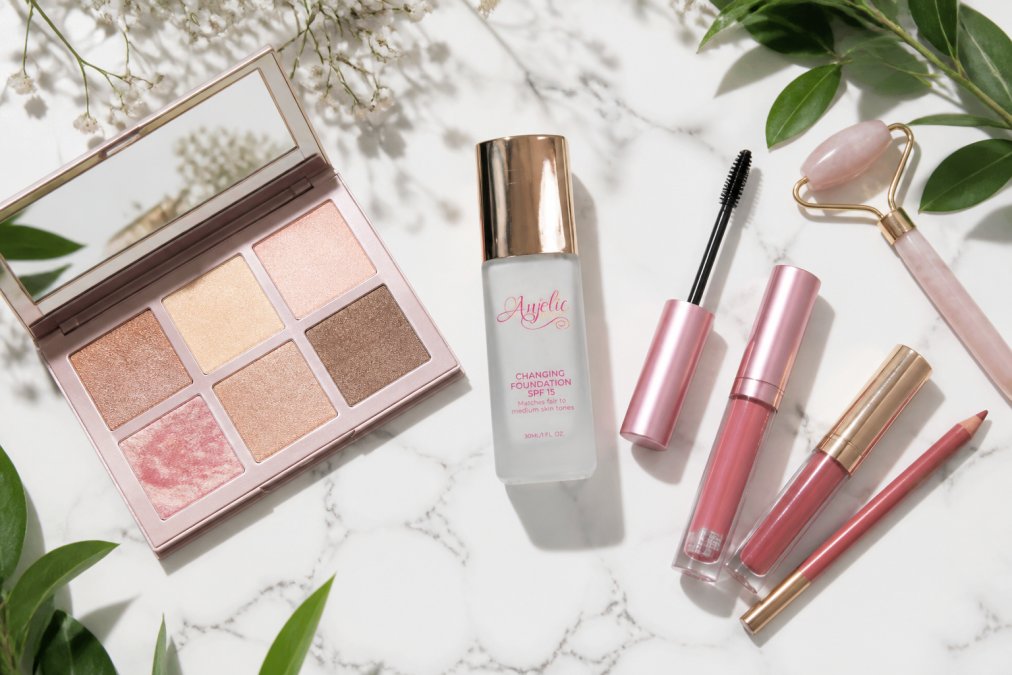
Anjelic Beauty's HeavenLift™ Mascara ($22) delivers lash volume and all-day hold without irritating additives. The formula is long-lasting and smudge-resistant with no flaking throughout the day. One customer described it as "super easy to apply, leaves the eyelashes huge and beautiful, and super easy to remove too."

For liner, Anjelic Beauty's PrecisionLine™ Define Pen ($20) uses a fine-tip design for sharp lines that resist smudging and fading. The 100% vegan, non-toxic formula skips the synthetic dyes that commonly irritate the waterline.
What to look for in eye products for sensitive skin:
- Ophthalmologist-tested designation
- No synthetic fragrance or dyes
- Easy removal with a gentle cleanser
- Fiber-free mascara formulas
Lips: Long-Wear Formulas That Skip the Drying Agents
Most long-wear lip formulas achieve staying power through alcohol or drying film-formers, leaving sensitive lips cracked and peeling by afternoon.
Anjelic Beauty's Midnight Blush Matte Lip Kit ($24) delivers a velvety matte finish without drying. A customer noted: "I love the variety of colors and really appreciate how they don't dry out your lips like a lot of other liquid lipsticks do."
For a lighter option, Anjelic Beauty's Natural Nude Glossy Lip Kit ($24) offers a creamy, glossy finish in a flattering nude tone that works across skin tones.
Glow: Highlighter That Sits Comfortably on Reactive Skin
Anjelic Beauty's Celestia Glow™ Highlighter Palette ($30) offers six shades designed to enhance every skin tone with a radiant, customizable glow. The formula is skin-friendly and fade-proof. Customers describe the pigmentation as "surreal" with "great pigmentation and shine." The breathable formula doesn't feel heavy or occlusive.
Budget vs. Higher-End Vegan Makeup: What You Actually Get
| Category | Budget Range | Higher-End Range | Key Difference |
|---|---|---|---|
| Foundation | Under $20 | $35-$60 | Shade range, oxidation resistance, SPF inclusion |
| Mascara | Under $15 | $20-$30 | Formula longevity, smudge resistance |
| Lip products | Under $12 | $20-$35 | Moisture retention, pigment depth |
| Highlighter | Under $15 | $25-$45 | Pigmentation quality, skin-friendliness |
| Eyeshadow palette | Under $20 | $35-$55 | Blend-ability, staying power, shade range |
Budget vegan makeup has improved significantly, with many accessible options genuinely cruelty-free and free of the worst irritants. Where they tend to fall short is oxidation resistance, long-wear performance, and shade inclusivity for deeper skin tones. Higher-end vegan formulas typically invest more in True Tone Technology and skin-compatible actives. For sensitive skin specifically, the formulation quality difference is real, fewer reactive ingredients, more clinical testing, and better compatibility with the skin barrier.
Your Daily Sensitive Skin Makeup Routine, Step by Step
A sensitive skin makeup routine works best when it's systematic. Fewer products, better chosen, applied in the right order.
Step 1: Barrier prep Apply a fragrance-free, non-comedogenic moisturizer and let it absorb fully, at least 60 seconds.
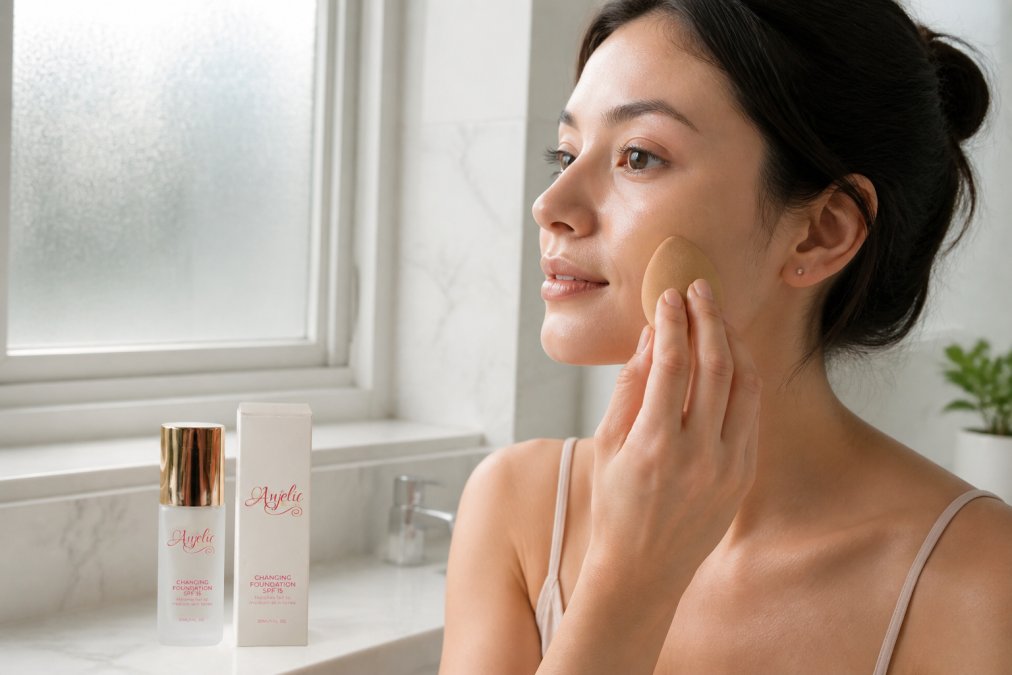
Step 2: SPF If your foundation doesn't include SPF, apply a mineral SPF separately. The AuraAlign™ foundation includes SPF 15.
Step 3: Foundation Apply with a damp sponge using pressing motions rather than dragging. Build coverage in thin layers.
Step 4: Concealer Spot-apply under eyes and over any active blemishes only.
Step 5: Eye makeup Liner first, then mascara.
Step 6: Highlighter Apply to the high points of the face with a fan brush, light-handed.
Step 7: Lip color Use a brush to control pressure rather than applying directly from the tube.
Makeup Removal for Sensitive Skin: The Step Most People Skip
Aggressive rubbing, harsh micellar waters, and skipping removal entirely compromise the skin barrier over time. The right approach for reactive skin:
- Start with a cleansing oil or balm. Oil dissolves pigment without friction. Apply to dry skin, massage gently, then emulsify with water.
- Follow with a gentle, fragrance-free cleanser. A second cleanse removes oil residue and remaining pigment.
- Use a soft muslin cloth or cotton pad with zero pressure. Pat, don't rub.
- Eye makeup removal requires a dedicated product. Apply a biphasic micellar water or eye makeup remover with a soaked cotton pad held in place for 10 seconds.
- Finish with your regular moisturizer immediately. Don't let freshly cleansed skin sit without hydration.
According to American Academy of Dermatology guidelines on skin care, avoiding aggressive rubbing and choosing fragrance-free cleansers are among the most important steps for managing sensitive skin. Long-wear vegan makeup that's easy to remove, like Anjelic Beauty eye and lip formulas customers describe as "super easy to remove", reduces the friction and product load needed to get clean skin at the end of the day.
Sensitive skin doesn't have to mean a bare face or a compromised routine. Anjelic Beauty's full range, from the AuraAlign™ foundation with True Tone Technology that never shifts, to the HeavenLift™ Mascara and Celestia Glow™ Highlighter Palette, is built specifically for this. Every formula is 100% vegan, non-toxic, cruelty-free, and tested across 40+ shades to work with your skin, not against it. Get yours now at shopanjelic.com and see what a routine built for real skin actually feels like.

=== FAQ ANSWERS (audit these too, same rules) ===
[1] Q: Are vegan makeup products always better for sensitive skin? A: Not automatically. Vegan means no animal-derived ingredients, but a formula can still contain synthetic fragrance, essential oils, or alcohol that irritate reactive skin. According to Mintel's 2023 Global Beauty Trends Report, 45% of consumers believe vegan beauty products are better for their health, but dermatologists note that 'clean' and 'vegan' labels are unregulated. Always check for fragrance-free, paraben-free, and non-comedogenic claims alongside the vegan label before buying.
[2] Q: What is the best hypoallergenic vegan makeup for sensitive skin? A: Look for formulas that are fragrance-free, silicone-free, and dermatologist-tested, with non-comedogenic certification. Mineral-based pigments and plant-based actives like aloe vera, chamomile, and squalane are generally well-tolerated. Anjelic Beauty's AuraAlign™ Liquid Changing Foundation ($40) combines SPF 15 with skincare-grade actives and is 100% vegan and cruelty-free, making it a strong option for sensitive and acne-prone skin types.
[3] Q: How do I patch test vegan makeup for sensitive skin? A: Apply a small amount of the product to the inside of your wrist or behind your ear. Leave it on for 24 hours without washing. If you see redness, swelling, or itching, skip that product. For eye products like mascara or eyeliner, test on the inner arm rather than near the eye first. Patch testing is especially important when switching to new botanical extracts or plant-based actives, which can still trigger contact dermatitis in sensitive individuals.
[4] Q: What clean beauty ingredients should sensitive skin avoid? A: The biggest triggers for reactive skin include synthetic fragrance (listed as 'fragrance' or 'parfum'), essential oils like lavender and peppermint, alcohol denat, sulfates, and synthetic dyes. Some preservatives used as paraben substitutes, such as methylisothiazolinone, are more allergenic than what they replaced. Formaldehyde-releasing preservatives and high concentrations of AHAs without buffering agents can also compromise the skin barrier and worsen sensitivity.
[5] Q: Can vegan makeup provide full coverage for blemishes and dark circles? A: Yes. Full coverage and vegan formulation are not mutually exclusive. Plant-based pigments, mineral-based foundations, and fruit- and vegetable-derived colorants have advanced significantly. Anjelic Beauty's AuraAlign™ Foundation blends skincare-grade actives with True Tone Technology for coverage that does not oxidize or shift by midday.
Frequently Asked Questions
Q: Are vegan makeup products always better for sensitive skin?
A: Not automatically. Vegan means no animal-derived ingredients, but a formula can still contain synthetic fragrance, essential oils, or alcohol that irritate reactive skin. According to Mintel's 2023 Global Beauty Trends Report, 45% of consumers believe vegan beauty products are better for their health, but dermatologists note that 'clean' and 'vegan' labels are unregulated. Always check for fragrance-free, paraben-free, and non-comedogenic claims alongside the vegan label before buying.
Q: What is the best hypoallergenic vegan makeup for sensitive skin?
A: Look for formulas that are fragrance-free, silicone-free, and dermatologist-tested, with non-comedogenic certification. Mineral-based pigments and plant-based actives like aloe vera, chamomile, and squalane are generally well-tolerated. Anjelic Beauty's AuraAlign™ Liquid Changing Foundation ($40) combines SPF 15 with skincare-grade actives and is 100% vegan and cruelty-free, making it a strong option for sensitive and acne-prone skin types.
Q: How do I patch test vegan makeup for sensitive skin?
A: Apply a small amount of the product to the inside of your wrist or behind your ear. Leave it on for 24 hours without washing. If you see redness, swelling, or itching, skip that product. For eye products like mascara or eyeliner, test on the inner arm rather than near the eye first. Patch testing is especially important when switching to new botanical extracts or plant-based actives, which can still trigger contact dermatitis in sensitive individuals.
Q: What clean beauty ingredients should sensitive skin avoid?
A: The biggest triggers for reactive skin include synthetic fragrance (listed as 'fragrance' or 'parfum'), essential oils like lavender and peppermint, alcohol denat, sulfates, and synthetic dyes. Some preservatives used as paraben substitutes, such as methylisothiazolinone, are more allergenic than what they replaced. Formaldehyde-releasing preservatives and high concentrations of AHAs without buffering agents can also compromise the skin barrier and worsen sensitivity.
Q: Can vegan makeup provide full coverage for blemishes and dark circles?
A: Yes. Full coverage and vegan formulation are not mutually exclusive. Plant-based pigments, mineral-based foundations, and fruit- and vegetable-derived colorants have advanced significantly. Anjelic Beauty's AuraAlign™ Foundation blends skincare-grade actives with True Tone Technology for coverage that does not oxidize or shift by midday.
This article was written using GrandRanker