Free shipping on all orders

Table of Contents
- What 'Skincare Grade' Actually Means in Makeup Formulations
- How to Read Cosmetic Ingredient Labels Like a Pro
- Key Skincare Grade Makeup Ingredients and What They Do
- Ingredient Synergy, Conflicts, and Layering Rules
- Non-Comedogenic Makeup Ingredients: What to Look for and Avoid
- The Real Benefits of Skincare-Infused Makeup
- Budget vs. Luxury Formulas: Does the Price Difference Hold Up?
- Conclusion
Last Updated: August 24, 2026
What 'Skincare Grade' Actually Means in Makeup Formulations
The phrase "skincare grade" appears on more makeup packaging than ever before. According to The Benchmarking Company's January 2025 beauty habits study, 67% of U.S. beauty-buying females regularly purchase products that perform more than one function. At Anjelic Beauty, we've spent years formulating around this exact demand: products that deliver genuine skincare benefits without sacrificing pigment performance.

Skincare grade makeup signals that a product contains active ingredients typically found in dedicated skincare formulations, such as hyaluronic acid, retinoids, peptides, or ceramides. The critical qualifier: "skincare grade" is not a regulated classification under U.S. law. The FDA governs cosmetics under the Federal Food, Drug, and Cosmetic Act, and that framework does not define or pre-approve the term. All cosmetic lines have access to the same ingredient pool.
Active vs. Inactive Ingredients: The Real Distinction
Active ingredients produce a measurable physiological effect on the skin. In OTC drug products like SPF foundations, the FDA requires actives to be listed separately with their percentages. In purely cosmetic formulas, an ingredient like niacinamide functions actively but is listed within the standard INCI sequence without a declared concentration.
Inactive ingredients form the vehicle: emulsifiers, thickeners, preservatives, and solvents that deliver actives to the skin and maintain stability. A product can list retinol on its label at a concentration too low to produce any measurable effect. Knowing this distinction is the first filter every informed buyer should apply.
Why Concentration and Bioavailability Matter More Than the Label
Most skincare ingredients in makeup appear at lower concentrations than in dedicated serums, partly due to formulation constraints: high concentrations of exfoliants or retinoids can destabilize pigments and reduce shelf life.
Bioavailability, the proportion of an ingredient that reaches its target skin layer, depends on molecular weight, pH balance, and penetration enhancers. A high-molecular-weight hyaluronic acid plumps by attracting surface moisture. A low-molecular-weight version penetrates deeper but requires sophisticated delivery systems.
As board-certified dermatologist Dr. Amy Spizuoco noted in a 2025 interview:
"Skin care-infused makeup can be effective, but its benefits depend on the formulation and concentration of active ingredients. While it won't replace a dedicated skin care routine, it can provide added hydration, sun protection or antioxidant support throughout the day." -- Dr. Amy Spizuoco, Board-Certified Dermatologist and Dermatopathologist (Today Show, 2025)
Skincare grade makeup works best as a supplement to your routine, not a replacement for it.
How to Read Cosmetic Ingredient Labels Like a Pro
Reading a cosmetic ingredient label correctly takes about 60 seconds once you know the system. The U.S. requires all cosmetics sold domestically to list ingredients using the International Nomenclature of Cosmetic Ingredients standard, descending from highest to lowest concentration.
INCI Order and What It Tells You
INCI (International Nomenclature of Cosmetic Ingredients) is the standardized naming system used on all cosmetic labels sold in the U.S. Ingredients appear in descending order by weight, with one exception: anything present at 1% or below can be listed in any order after the main ingredients.
This means:
- Ingredients in the first five positions make up 80-90% of the formula by weight
- Water (Aqua) leading the list signals a water-based formula; silicones signal a silicone base
- Active ingredients appearing near the bottom are likely present below 1% concentration
- Fragrance and preservatives typically appear in the lower third
A common mistake is assuming that seeing a beneficial ingredient anywhere on the label means it delivers meaningful benefit. Position matters.
Decoding Common Ingredient Categories on the Label
| Ingredient Function | Common INCI Examples | What It Does |
|---|---|---|
| Humectant | Glycerin, Sodium Hyaluronate, Propylene Glycol | Draws moisture into the skin |
| Emollient | Squalane, Caprylic/Capric Triglyceride, Dimethicone | Softens and smooths the skin surface |
| Occlusive | Petrolatum, Beeswax, Carnauba Wax | Seals moisture in, creates a barrier |
| Antioxidant | Tocopherol (Vitamin E), Ascorbic Acid (Vitamin C) | Neutralizes free radical damage |
| Exfoliant | Lactic Acid, Salicylic Acid, Glycolic Acid | Accelerates cell turnover |
| Peptide | Palmitoyl Tripeptide-1, Acetyl Hexapeptide-3 | Supports collagen synthesis |
| Preservative | Phenoxyethanol, Ethylhexylglycerin, Potassium Sorbate | Prevents microbial growth |
| Fragrance | Parfum, Linalool, Limonene | Scent; common sensitizer |
Key Skincare Grade Makeup Ingredients and What They Do
Understanding individual ingredients separates informed purchasing from label-reading theater.
Humectants, Emollients, and Occlusives
These three categories form the foundation of any hydrating makeup formula and work as a system.
Humectants pull water from the dermis into upper skin layers. Glycerin is the most common and most studied. Sodium hyaluronate is smaller in molecular weight than hyaluronic acid, giving it slightly better dermal absorption.
Emollients fill gaps between skin cells, creating a smooth surface that improves texture and makeup application. Squalane is particularly stable and non-comedogenic.
Occlusives form a physical seal over the skin to prevent transepidermal water loss. Carnauba wax and candelilla wax are plant-based alternatives to beeswax in vegan formulations.
The practical rule: humectants attract moisture, emollients distribute it, occlusives lock it in. A formula containing all three maintains hydration through a full workday far more effectively than one relying on humectants alone.
Antioxidants, Peptides, and Ceramides
These justify the "skincare grade" designation when present at meaningful concentrations.
Antioxidants like tocopherol (Vitamin E) and ascorbic acid (Vitamin C) neutralize oxidative stress from UV exposure and pollution. In makeup, they protect skin during wear and stabilize the formula. Vitamin E prevents pigment oxidation, directly relevant if you have watched a foundation shift orange by midday.
Peptides are amino acid chains that signal the skin to produce collagen and elastin. Palmitoyl tripeptide-1 and acetyl hexapeptide-3 are most frequently used. Daily repeated exposure adds up, though makeup is typically worn 8-12 hours before removal.
Ceramides are lipid molecules that make up the skin barrier. Formulas containing ceramides actively support barrier repair during wear, particularly valuable for sensitive or compromised skin.
Exfoliants: Alpha Hydroxy Acids and Beta Hydroxy Acids
Exfoliants in makeup are nuanced. Used correctly, they improve texture and radiance. Used incorrectly, they cause sensitivity.
Alpha hydroxy acids (AHAs) like glycolic and lactic acid work on the skin's surface by dissolving bonds between dead skin cells. In makeup, they appear at low concentrations to improve smoothness and luminosity rather than deliver the cell-turnover effects of dedicated treatments.
Beta hydroxy acids (BHAs), primarily salicylic acid, are oil-soluble and penetrate the pore lining. At concentrations above 0.5%, salicylic acid is classified as an OTC drug active by the FDA for acne treatment (the FDA). In makeup, it typically appears below that threshold as a pore-refining agent.
Ingredient Synergy, Conflicts, and Layering Rules
Individual ingredients do not perform in isolation. How they interact with each other and with products applied underneath determines whether you get benefit or irritation.
Synergistic combinations that work:
- Vitamin C + Vitamin E: these antioxidants regenerate each other, producing stronger protection than either alone
- Niacinamide + ceramides: niacinamide supports ceramide synthesis, reinforcing the skin barrier more effectively
- Hyaluronic acid + occlusives: hyaluronic acid needs to be sealed in; without an occlusive, it can draw moisture out in low-humidity environments
Conflicts to know:
- AHAs and retinoids: both increase cell turnover and photosensitivity. Wearing AHA-containing makeup over a retinoid treatment can tip sensitive skin into irritation.
- Fragrance and actives: fragrance is the most common cause of contact dermatitis and can destabilize certain antioxidants. Fragrance-free formulas signal formulation quality.
The layering sequence for skincare grade makeup:
- Cleanser and toner
- Serum with actives (allow 60-90 seconds to absorb)
- Moisturizer with SPF, or separate moisturizer + SPF
- Primer if used
- Foundation or tinted moisturizer
- Concealer, contour, highlight
- Setting spray or powder
Your foundation's formula interacts with whatever is beneath it. A silicone-based primer under a water-based foundation will cause pilling. A heavy occlusive moisturizer under a matte foundation will break it down by midday. Knowing the base chemistry of each product is as important as knowing the active ingredients.

Non-Comedogenic Makeup Ingredients: What to Look for and Avoid
Non-comedogenic means a product is formulated to avoid clogging pores. It is not a regulated claim, but it signals that a brand has considered pore-blocking potential.
Ingredients with low comedogenic ratings (0-1):
- Squalane (0)
- Dimethicone (1)
- Sodium hyaluronate (0)
- Glycerin (0)
- Titanium dioxide (1)
- Zinc oxide (0-1)
Ingredients with higher comedogenic ratings:
- Coconut oil (4)
- Isopropyl Myristate (3-5)
- Wheat germ oil (5)
Patch testing remains the most reliable method. Apply a small amount to the inner forearm or behind the ear for 48 hours before full-face application.
The Real Benefits of Skincare-Infused Makeup
When formulated with genuine intent, skincare grade makeup delivers real, measurable advantages over conventional cosmetics.
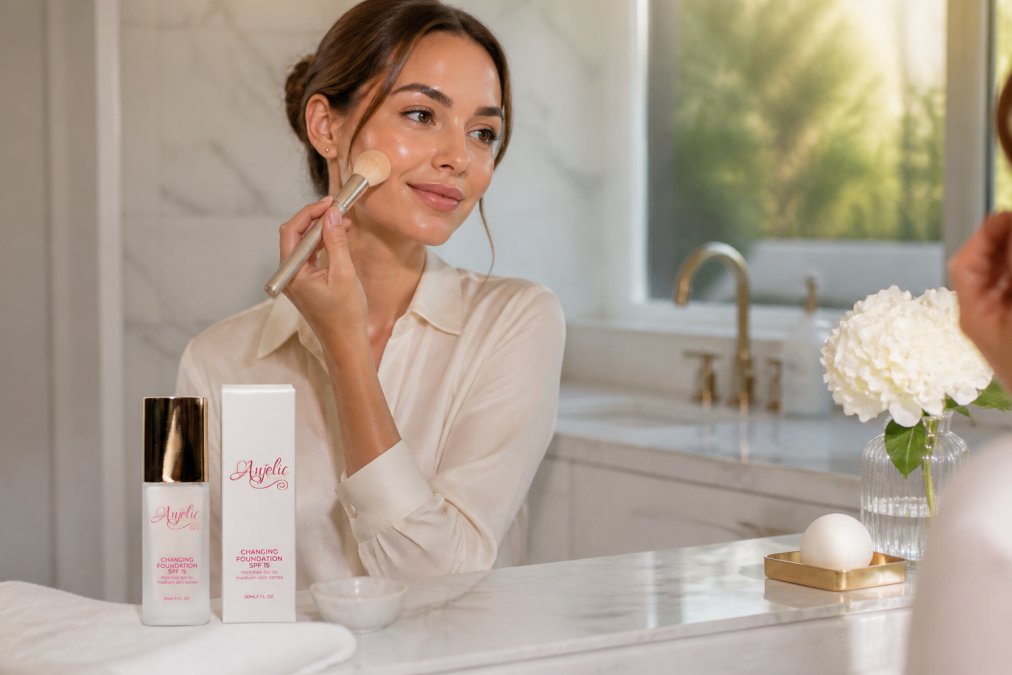
The most immediate benefit is extended hydration. Foundations containing a functional humectant-emollient-occlusive system maintain skin moisture throughout the day, directly affecting how makeup looks by hour eight. Hydrated skin does not crease, settle into fine lines, or develop patchy texture.
Celebrity makeup artist Isamaya Ffrench described the category's appeal in a 2025 interview:
"I've often felt like wearing makeup undoes all of the many immersive hours we spend on our skin, from expensive creams to futuristic treatments. One wrong makeup texture can wreak full-blown havoc in the form of congestion, acne, irritation and all sorts. Makeup with a focus on skin health felt like the thing I've been waiting for and just what the faces of today need!" -- Isamaya Ffrench, Celebrity Makeup Artist (Who What Wear, 2025)
The second benefit is antioxidant protection during wear. A foundation containing tocopherol and ascorbic acid provides a secondary antioxidant layer on top of morning SPF, particularly relevant for commuters and anyone spending time outdoors.
The third benefit is skin barrier support. Ceramide- and peptide-containing formulas actively reinforce the skin barrier during wear. For individuals with sensitive or compromised skin, this shifts makeup from neutral to mildly therapeutic.
According to Grand View Research's hybrid makeup market report, the hybrid makeup market is projected to grow at a compound annual growth rate of 5.6% from 2024 to 2030. Consumer demand reflects a structural change in how people think about their daily routine.
Anjelic Beauty's Smart Glam System™ was built around these benefits: skincare-grade actives blended with vegan pigments that enhance natural radiance without masking the skin.

Budget vs. Luxury Formulas: Does the Price Difference Hold Up?
Sometimes. Not always. The real variables that justify a higher price point are:
1. Ingredient quality and sourcing. Pharmaceutical-grade niacinamide has higher purity and more consistent particle size than cosmetic-grade, affecting both efficacy and skin tolerance.
2. Concentration. Luxury brands are more likely to invest in higher active concentrations. A $12 foundation may contain hyaluronic acid at 0.01%; a $40 version may contain it at 0.5-1%.
3. Formulation sophistication. Advanced delivery systems, liposomal encapsulation, and penetration enhancers meaningfully improve bioavailability of actives.
4. Preservative system. Better-formulated products use more sophisticated preservative systems effective at lower concentrations, reducing irritation potential.
Where the price difference does NOT hold up:
- Fragrance. Premium products are not reliably fragrance-free. Many luxury foundations contain parfum, adding cost and irritation risk.
- Packaging claims. "Clean," "natural," or "botanical" are unregulated marketing language.
- Brand prestige. A significant portion of luxury price reflects distribution, advertising, and packaging, not formulation investment.
Compare the first ten INCI ingredients between budget and luxury options. If the base chemistry is similar and actives appear in comparable positions, formulation quality is likely comparable. If the luxury formula shows actives higher in the list, a more sophisticated preservative system, and no fragrance, the premium is probably earned.
Anjelic Beauty's AuraAlign™ Liquid Changing Foundation ($40) includes SPF 15 and a vegan formulation designed to adapt to fair-to-medium skin tones without oxidizing. That non-oxidizing performance is where the formulation investment shows up in practice.
The skincare grade makeup category has genuine merit and genuine marketing excess. The consumers who get the most value are those who read past front-of-pack claims and into the INCI list, who know that position matters, concentration matters, and that a trace of retinol in a long ingredient list is not the same as a retinoid treatment.
Anjelic Beauty's approach starts with that same honesty: real actives, vegan formulas, and performance you can verify by the end of the day. Explore the full range at Anjelic Beauty and find the formula that works with your skin, not just on it.
Frequently Asked Questions
What does 'skincare-grade' mean in makeup formulations?
The term 'skincare-grade' signals that a makeup formula contains recognized active ingredients, such as hyaluronic acid, ceramides, or retinoids, at concentrations intended to deliver skin benefits beyond color alone. However, it is a marketing descriptor, not a regulated classification. The FDA governs cosmetics for safety, not efficacy, so no agency pre-approves these claims. Always check the INCI list to confirm an active ingredient appears high enough in the list to be present at a meaningful concentration.
Can makeup with skincare ingredients replace your daily serum or moisturizer?
Skincare grade makeup can complement your routine but should not replace dedicated skincare products. Dr. Amy Spizuoco, a board-certified dermatologist, notes that while these formulas can provide added hydration, sun protection, or antioxidant support throughout the day, they won't replace a dedicated skincare routine. Active ingredient concentrations in makeup are typically lower than in serums, and many actives cannot penetrate the skin efficiently through a makeup base. Think of them as a useful supplement, not a substitute.
Which skincare ingredients should people with sensitive skin avoid in makeup?
Those with sensitive skin should approach fragrance, alcohol denat, synthetic dyes, and high concentrations of alpha hydroxy acids with caution, as these can disrupt the skin barrier and trigger irritation. Parabens and sulfates are also common concerns, though research on their risk at cosmetic concentrations is mixed. Patch testing any new formula on the inside of your wrist for 24 to 48 hours before full application is the most reliable way to screen for a reaction before committing to a product.
How can you tell if makeup ingredients are actually beneficial for your skin?
Start with the INCI list. Ingredients are listed in descending order of concentration, so a beneficial active like hyaluronic acid or niacinamide should appear in the first half of the list to have a meaningful effect. Cross-reference the ingredient against the Northwestern University Delphi consensus study, which identified 23 dermatologist-recommended topical actives. If an ingredient appears near the bottom, after preservatives, its concentration is likely too low to deliver a measurable skin benefit.
What are the most common skincare-grade actives found in modern makeup?
The most frequently used skincare-grade actives in makeup include hyaluronic acid (humectant for hydration), niacinamide (barrier support and tone-evening), mineral sunscreen actives like zinc oxide (broad-spectrum UV protection), ceramides (skin barrier reinforcement), and vitamin C or E derivatives (antioxidant defense against oxidative stress). Peptides appear in premium formulas to support collagen synthesis. A 2025 Delphi consensus among 62 dermatologists ranked mineral sunscreen and retinoids as top multi-benefit performers.
Are there specific ingredients to avoid when choosing non-comedogenic makeup?
Yes. Ingredients with a high comedogenic rating include isopropyl myristate, coconut oil, wheat germ oil, and certain silicones like dimethicone at high concentrations. Lanolin and cocoa butter are also frequent pore-cloggers for acne-prone skin. Look for makeup labeled non-comedogenic and formulated with lighter emollients such as squalane, jojoba oil, or cyclopentasiloxane. Even with a non-comedogenic label, individual skin responses vary, so patch testing on the jaw or chin area before full use is advisable.
This article was written using GrandRanker