Free shipping on all orders
Table of Contents
- Why Vegan Foundation for Oily Skin Fails (and How to Fix It)
- What Makes a Non-Comedogenic Vegan Foundation Actually Work
- Liquid vs. Mineral: Choosing the Right Formula for Your Shine
- The Best Matte Finish Vegan Foundation for All-Day Wear
- How to Keep Vegan Makeup From Sliding Off Oily Skin
- Why Foundations Oxidize and How to Prevent It
- Budget vs. Luxury: Does Price Predict Performance?
- Our Top Pick: AuraAlign™ Liquid Changing Foundation
- Frequently Asked Questions
Last Updated: September 6, 2026
Finding the best vegan foundation for oily skin often feels like a losing battle. You buy a formula that promises a matte finish, only to watch it slide off by noon or oxidize into a shade that no longer matches your jawline. The problem isn't your skin; it's that most guides treat "vegan" and "oil-control" as separate checkboxes rather than a single formulation challenge.
The core issue is that vegan doesn't automatically mean non-comedogenic or sebum-absorbing. A foundation can be 100% plant-based and still sit heavy on the skin, triggering excess oil production as a reaction. Below, we'll break down exactly what to look for, which textures perform best, and how to keep your vegan makeup from sliding off oily skin.
Why Vegan Foundation for Oily Skin Fails (and How to Fix It)
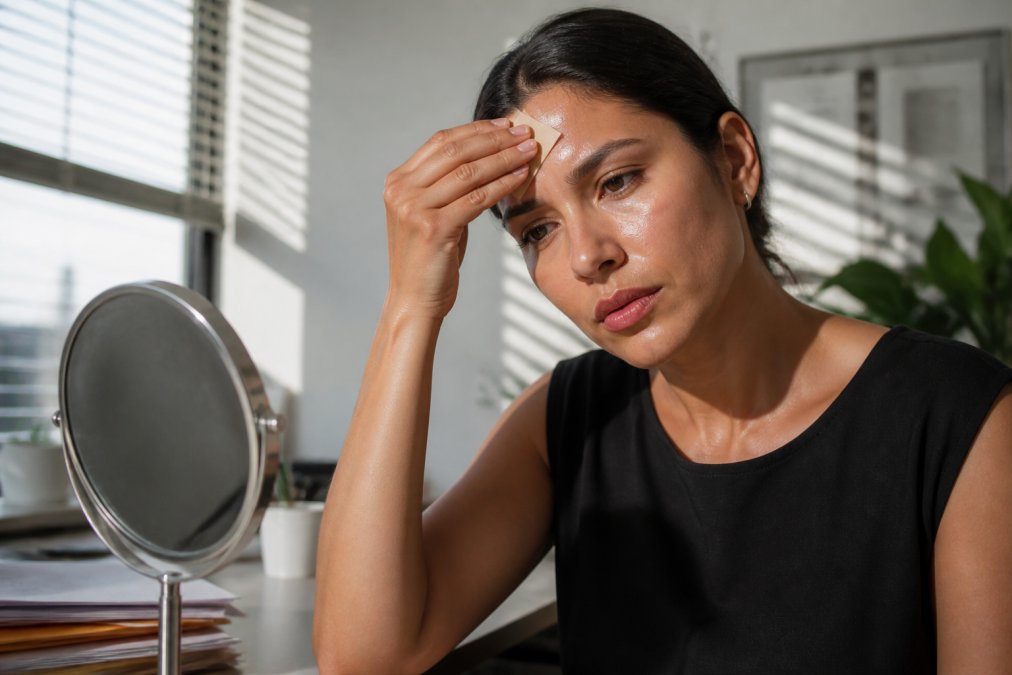
Most oily-skin foundation failures trace back to one mistake: choosing a formula heavy in oils and butters that mimic the skin's own sebum. While these ingredients feel luxurious on dry skin, they compound oiliness on combination and oily types, leading to breakdown and creasing by midday.
Dermatologists recommend oil-free, non-comedogenic liquid or powder foundations for oily skin, specifically highlighting active ingredients like niacinamide and kaolin to manage oil production, according to a 2024 report from Dataintelo. Niacinamide helps regulate sebum production over time, while kaolin clay absorbs excess oil on contact without stripping the skin's natural moisture barrier. This dual-action approach is what separates a foundation that merely covers from one that actively works with your skin type.
What Makes a Non-Comedogenic Vegan Foundation Actually Work
The term "non-comedogenic" is a marketing claim, not a regulated standard. It means the formula's ingredients are unlikely to clog pores based on laboratory testing, but it doesn't guarantee zero breakouts. For oily, acne-prone skin, the real test is whether the specific vegan ingredients in the formula have a low comedogenic rating and whether they interact with your skin's unique microbiome.
Most guides stop at "avoid coconut oil and shea butter," but the deeper issue is that many vegan thickeners and emulsifiers are also pore-clogging culprits. For example, sodium lauryl sulfate can disrupt the skin barrier and trigger excess oil production as a rebound effect. Similarly, certain fatty alcohols like cetyl alcohol and stearyl alcohol have a comedogenic rating of 2-3 on a scale of 0-5, according to the American Academy of Dermatology's ingredient database, making them problematic for highly reactive skin.
A more reliable approach is to look for vegan foundations that use silicone alternatives like dimethicone crosspolymer or silica silylate. These ingredients create a breathable, non-occlusive film that allows sweat and sebum to evaporate while keeping the pigment in place. They are not comedogenic and are widely used in dermatologist-recommended oil-control products.
Additionally, consider the role of humectants. Glycerin, a common vegan humectant, draws water from the air into the skin. In a humid climate, this can lead to a dewy, shiny finish that defeats the purpose of an oil-control foundation. In a dry climate, it can help maintain hydration without adding oil. This is why the same foundation can perform differently depending on your local weather patterns.
A practical way to assess a formula's non-comedogenic claims is to check the ingredient list for "PEG" compounds. Polyethylene glycols are often used as penetration enhancers in vegan cosmetics. While they help deliver beneficial actives, they can also carry other ingredients deeper into the pore, which may trigger a reaction if those ingredients are comedogenic.
For a truly non-comedogenic vegan foundation, prioritize formulas that list "silica," "kaolin," or "zinc oxide" in the first five ingredients. These minerals provide oil absorption and a matte finish without relying on oils or waxes that can clog pores. They also offer a physical barrier that helps prevent environmental pollutants from settling into your pores throughout the day.
Liquid vs. Mineral: Choosing the Right Formula for Your Shine
When comparing liquid and mineral vegan foundations, the decision comes down to your coverage needs and how much oil your skin produces throughout the day. Mineral powder foundations are often the safest bet for very oily skin because they sit on the surface and absorb oil passively. Liquid formulas, however, offer more buildable coverage and are better for those who need to conceal blemishes or dark circles.
| Formula Type | Oil Control | Coverage | Best For | Finish |
|---|---|---|---|---|
| Mineral Powder | Excellent | Light to Medium | Very oily, low-maintenance routines | Natural matte |
| Oil-Free Liquid | Good to Excellent | Medium to Full | Combination to oily, needs coverage | Matte to Satin |
| Water-Based Liquid | Moderate | Sheer to Medium | Slightly oily, prefers lightweight feel | Natural to Dewy |
Mineral foundations are identified as capable of absorbing excess oil without drying out the skin, making them a preferred choice for oily skin types, according to INIKA Organic USA's ingredient insights. The trade-off is that powder formulas can look cakey if applied too heavily, and they may not provide the full-coverage finish some women need for blemishes or hyperpigmentation. A high-quality oil-free liquid offers the best of both worlds: buildable coverage with a natural finish.
The Best Matte Finish Vegan Foundation for All-Day Wear
The best matte finish vegan foundation for oily skin is one that controls shine without looking flat or mask-like. Expert reviews define the "best" foundation for oily skin in 2026 as one that specifically controls shine, resists breakdown throughout the day, and maintains a smooth, matte finish, as noted by Really Ree's foundation testing guide. This means the formula should contain sebum-absorbing ingredients while still allowing the skin's natural texture to show through.
A common mistake is reaching for a full-coverage matte formula and applying it all over the face. This often looks heavy and can emphasize fine lines or dry patches. Instead, apply a lighter layer of a matte finish foundation across the whole face, then build coverage only where you need it, such as the T-zone or around the nose. This technique gives you the oil-control you need without the cakey appearance.
How to Keep Vegan Makeup From Sliding Off Oily Skin
Keeping vegan makeup from sliding off oily skin starts with preparation, not the foundation itself. Your skincare routine plays a larger role in foundation longevity than the makeup product you choose. Begin with a gentle cleanser, follow with a water-based moisturizer, and finish with a mattifying primer before applying any foundation. This creates a smooth, oil-free canvas for your makeup to adhere to.
Many women skip primer thinking it adds an unnecessary step, but for oily skin, it's the difference between eight-hour wear and a two-hour meltdown. Look for a silicone-free primer that contains kaolin or silica to absorb oil throughout the day. After applying foundation, set it with a light dusting of translucent or mattifying powder, focusing on the T-zone where oil production is highest.
Why Foundations Oxidize and How to Prevent It
Oxidation is a chemical reaction between the iron oxides in your foundation and the oxygen in the air, accelerated by the acidic pH of your skin's sebum. When your skin produces excess oil, the sebum mixes with the foundation and lowers its pH, triggering the iron oxide pigments to change to a darker, often orange or yellow, shade.
The rate of oxidation is also influenced by your local climate. In high-humidity environments, the moisture in the air increases the rate of chemical reactions on your skin. A foundation that resists oxidation in a dry climate may oxidize within two hours in a humid city like Miami or Houston.
To prevent oxidation, you need to address both the formula and your skin's pH. First, look for foundations that use "surface-treated" iron oxides. These pigments are coated with a hydrophobic layer, often made from silica or a vegan wax, which prevents direct contact with your skin's oils and slows down the oxidation reaction. Many premium vegan brands use this technology, but it is rarely listed on the label. A good indicator is if the foundation claims to be "transfer-resistant" or "long-wearing," as these formulas often use treated pigments.
Second, consider your skincare prep. Applying a pH-balancing toner before your foundation can help keep your skin's pH in the optimal 4.5 to 5.5 range, which reduces the likelihood of a rapid oxidation reaction. Avoid using acidic serums like vitamin C immediately before applying foundation, as they can temporarily lower your skin's pH and trigger faster oxidation.
Another overlooked factor is the interaction between your sunscreen and your foundation. Many vegan foundations contain SPF, but the UV filters in sunscreen can react with the foundation's pigments. If you are using a separate sunscreen, choose a mineral-based one with zinc oxide or titanium dioxide, as these are less likely to cause oxidation than chemical UV filters.
Finally, consider the role of your setting powder. A translucent powder with a silica base can act as a barrier between your skin's oils and the foundation, reducing the amount of sebum that reaches the pigment and extending the life of your foundation's color.
Budget vs. Luxury: Does Price Predict Performance?
Price does not reliably predict how well a vegan foundation will control oil. Recent 2026 testing identifies specific mass-market products, such as Maybelline's Super Stay Lumi-Matte Foundation, as notable options for oily skin, indicating a trend toward high-performance matte finishes in accessible price brackets, as reported by Cosmopolitan's foundation testing. The key differentiator between budget and luxury formulas is often the quality of the pigment and the inclusion of skincare-grade actives, not the oil-control capability itself.
What you're paying for in a premium formula is often the finish, the longevity, and the absence of pore-clogging fillers. Budget foundations may control oil initially but can break down or oxidize faster by the end of a 10-hour workday.
Our Top Pick: AuraAlign™ Liquid Changing Foundation
For most women with oily skin, our top pick is the AuraAlign™ Liquid Changing Foundation from Anjelic Beauty. This 100% vegan, non-toxic, and cruelty-free formula expertly adapts to fair to medium skin tones, providing a natural, flawless finish. Infused with SPF 15, it offers daily protection against harmful UV rays while maintaining the skin's radiant appearance without triggering excess oil.

The formula blends effortlessly, ensuring an even complexion with buildable coverage that enhances your natural radiance rather than masking it. At $40.00, it sits at a mid-range price point that reflects its dual function as both a foundation and a skincare product. The Smart Glam System™ combines skincare-grade actives with vegan pigments, offering lightweight, long-lasting performance without the heaviness that causes breakdown.
Finding the right foundation for oily skin requires understanding your unique skin chemistry and how different ingredients interact with it. Most formulas fail because they treat oil as an afterthought rather than the primary design constraint. Anjelic Beauty's AuraAlign™ Liquid Changing Foundation was formulated with this exact challenge in mind, combining True Tone Technology for non-oxidizing color with a lightweight, breathable texture.
Frequently Asked Questions
What is the best cruelty-free foundation for oily skin?
The best cruelty-free foundation for oily skin is one that is also non-comedogenic and offers a matte or oil-control finish. Look for formulas with ingredients like niacinamide or kaolin clay. Anjelic Beauty's AuraAlign™ Liquid Changing Foundation is a strong option, offering a natural finish with SPF 15 while being 100% vegan and cruelty-free. It's designed to resist oxidation, keeping your color true from morning to night.
What type of foundation is best for oily skin?
Dermatologists recommend oil-free, non-comedogenic liquid or powder foundations for oily skin. Liquid formulas with a matte finish offer the most coverage and oil control. Mineral powder foundations are also excellent for absorbing excess oil without drying out the skin. Avoid heavy, creamy formulas that can slide off or clog pores. Look for keywords like 'oil-control,' 'shine-free,' and 'long-wearing' on the label.
Does vegan foundation work well for oily skin types?
Yes, vegan foundation can work exceptionally well for oily skin. The key is to choose a formula specifically designed for your skin concern, not just one that is vegan. A vegan foundation for oily skin should be non-comedogenic, oil-free, and provide a matte finish to control shine. Many vegan brands use botanical extracts and oil-absorbing clays that help manage sebum without harsh chemicals, making them a great choice for sensitive, oily skin.
How do I keep my vegan foundation from oxidizing and turning orange?
Oxidation happens when foundation reacts with the oils on your skin. To prevent it, start with a clean, moisturized face and use an oil-control primer. Apply a thin layer of foundation and blend quickly. Set with a mattifying powder to lock the color in place. Choosing a foundation with 'True Tone Technology' or 'non-oxidizing' claims, like Anjelic Beauty's AuraAlign™, can also help ensure your shade stays true throughout the day.