Free shipping on all orders

Last Updated: November 12, 2026
Quick Summary
To create a professional makeup brush collection, build your core in synthetic bristles and match one brush to each product you use daily, starting with foundation, powder, blush, and one blending brush. Add concealer, packing, detail, and specialty brushes only after the core works, and wash weekly.
- Synthetic bristles work with liquid, cream, and powder formulas, are easier to clean, and are vegan.
- Match density to coverage: dense for base, medium for blush and contour, loose for powder.
- A 14-piece set at $70.00 works out to $5.00 per brush, lower cost per use than singles.
- Wash brushes weekly with gentle soap, rinse until clear, reshape, and dry flat.
- Test brushes for shedding, softness, and shape retention after a wash and dry.
Table of Contents
- The Foundation: Why a Professional Makeup Brush Collection Matters
- A Complete List of Makeup Brushes and Uses
- Synthetic vs. Natural Bristles: Which Should You Choose?
- How to Choose the Best Makeup Brushes Set for Your Needs
- How to Clean Makeup Brushes: A Step-by-Step Routine
- How to Build a Professional Makeup Kit: Beyond the Brushes
- Essential vs. Optional Brushes: A Checklist for Every Budget
- Start Your Collection with the Anjelic Signature Brush Set
- Frequently Asked Questions
The Foundation: Why a Professional Makeup Brush Collection Matters
A professional makeup brush collection is a curated set of tools chosen for function, not volume, and it changes how your products look on your skin. At Anjelic Beauty, we see the difference constantly: the same foundation can look patchy with one brush and seamless with another.
Below, we'll show you exactly how to create a professional makeup brush collection step by step, from face brushes to hygiene. But first, here's what most guides get wrong: they tell you to buy a giant set before you know what each brush does.
A Complete List of Makeup Brushes and Uses
A complete list of makeup brushes and uses starts with two groups: face brushes for base and color, and eye brushes for blending and detail. Nanshy's 2026 guide names foundation, powder, and blush detailer brushes as starter essentials, which confirms what we tell every beginner.
Face Brushes: Foundation, Powder, Blush, and Contour
Face brushes do the heavy lifting. A foundation brush buffs liquid or cream into an even base. A powder brush sets makeup with a light dusting. A blush brush places color on the cheeks, and a contour brush carves shape along the jaw and cheekbones. If you want to shop by category, you can browse the face makeup range to match brushes to your base products.
Eye Brushes: Blending, Packing, and Detail
Eye brushes are where precision lives. A flat packing brush lays down eyeshadow color. A fluffy blending brush diffuses color through the crease. A small detail brush handles the lash line and inner corner. For a closer look at these tools, shop the eye makeup category and pair each brush with the formula it serves best.
Synthetic vs. Natural Bristles: Which Should You Choose?
Synthetic bristles are the better choice for most people building a collection today. They work with cream, liquid, and powder formulas, they are easier to clean, and they are vegan. Natural bristles, usually animal hair, pick up powder well but absorb liquid products and need gentler care. That one-paragraph answer is where most guides stop, but the material choice affects pickup, blend time, shedding, and how long a brush survives weekly washing, so it deserves a closer look.
How Bristle Material Changes Performance
Bristle material determines how a brush holds product and releases it onto skin. Synthetic filaments, typically made from nylon, polyester, or taklon, have a smooth, non-porous surface.
The trade-off is absorption. Natural bristles drink up liquid and cream formulas, wasting product and making coverage harder to control. Synthetic bristles do not absorb, so a pump of foundation goes further and the finish stays consistent from the first pass to the last.
Density, Cut, and Shape Matter as Much as Material
Two brushes with identical bristles can perform completely differently based on how they are built. Density, the number of bristles packed into the ferrule, controls how much product the brush picks up and how firmly it presses into skin. A dense, flat-topped synthetic brush buffs foundation for fuller coverage; a loosely packed brush sheers it out.
A common pattern among working artists is to match density to coverage: dense for base, medium for blush and contour, loose for powder and blending. When you shop, squeeze the head gently. A brush that fans out easily will apply color softly; one that springs back firmly will place color with more control.
The Practical Comparison
| Feature | Synthetic Bristles | Natural Bristles |
|---|---|---|
| Best with | Liquid, cream, powder | Powder mainly |
| Product pickup | Sits on surface, releases evenly | Traps and diffuses powder |
| Absorption | None | Absorbs liquids and creams |
| Cleaning | Easy, dries fast | Delicate, dries slow |
| Vegan | Yes | No |
| Cost | Usually lower | Usually higher |
| Durability | Holds shape well through washing | Softens and sheds over time |
| Common fibers | Nylon, polyester, taklon | Goat, squirrel, sable |
What This Means for Your Collection
For a first collection, build the core in synthetic. Foundation, concealer, cream blush, and cream contour all perform better with non-porous filaments, and synthetic brushes survive frequent washing without losing shape.
The Anjelic Signature Brush Collection uses premium synthetic bristles for exactly this reason: they blend precisely, do not waste liquid product, and hold up to regular washing. Watch out: natural-hair brushes should never be soaked or dried upright, because water breaks down the hair and the glue in the ferrule faster than it does on synthetic filaments.
How to Choose the Best Makeup Brushes Set for Your Needs
The best makeup brushes set is the one that matches your routine, not the biggest one on the shelf. Women's Wear Daily described a 2026 set with 25 brushes and 10 sponges, yet its own guidance says to be realistic about how many brushes you need. That's the honest answer most brands skip.
Follow these steps:
- List the products you use daily, such as foundation, powder, blush, and eyeshadow
- Match one brush to each product
- Check bristle type against your formulas
- Feel the handle and ferrule for balance
- Add specialty brushes only after the core works
For a deeper walkthrough, read how to select the right makeup brushes for beginners.
How to Clean Makeup Brushes: A Step-by-Step Routine
How to clean makeup brushes comes down to a simple weekly routine: wash with gentle soap, rinse until clear, reshape, and dry flat. A 2025 study in PubMed Central on brush contamination assessed bacterial contamination in cosmetic brushes used by the general public and professional makeup artists, which is reason enough to keep washing consistent.
- Wet bristles only, never the ferrule
- Add a drop of gentle soap
- Swirl on a silicone mat
- Rinse until the water runs clear
- Squeeze out excess water
- Reshape the brush head
- Dry flat with the head over the edge
Watch out: drying brushes upright lets water seep into the ferrule and loosens the glue, which shortens the life of the brush.
How to Build a Professional Makeup Kit: Beyond the Brushes
How to build a professional makeup kit means adding the right products around your tools, and the right tools around your work. Brushes only perform as well as the formulas they carry, but the kit that serves a bridal artist is not the kit that serves an editorial shoot or a film set. Most guides hand you one generic list. A role-based plan is more useful, because it tells you what to buy first and what to skip until the work demands it.
Plan by Role, Not by Volume
Start by naming the work you actually do, then build the kit around it.
- Bridal and event work: Long-wear base, setting powder, cream and powder blush, a neutral shadow palette, and a dense synthetic foundation brush plus a large powder brush. The priority is longevity under heat and photography, so choose formulas tested for flash and build in a setting step.
- Editorial and print: Sheer-to-buildable base, a wider shade range for mixing, cream color products, and precise detail brushes. The priority is versatility and quick changes, so favor brushes you can clean and reuse between looks.
- Film and video: Matte and satin bases, translucent powder, and brushes that lay product evenly under high-resolution cameras. The priority is consistency and minimal texture, so dense buffing brushes and soft powder brushes earn their place.
- Freelance and mobile work: A compact core that covers base, color, and eyes, plus duplicates of the brushes you reach for most. The priority is portability and backup, so a 14-piece set with a case beats a 30-piece set that never leaves the studio.
Build in Budget Tiers
A transparent buying plan helps you prioritize without assuming a bigger kit is better.
| Tier | What to Buy | Why |
|---|---|---|
| Starter | Foundation, powder, blush, one blending brush | Covers a full routine |
| Mid-range | Add concealer, packing, detail, and a second blending brush | Adds precision and speed |
| Premium | Add contour, fan, lip, and duplicates of daily brushes | Specialty finishes and backup |
Budget tip: a 14-piece set at $70.00 works out to $5.00 per brush, which is lower cost per use than buying singles one at a time. Add specialty brushes only after the core works, and replace the brushes you use daily before you expand into tools you use once a month.
Test Before You Commit
Before a brush joins your kit, check how it performs. Look for shedding when you run your fingers through the bristles, softness without scratchiness on the back of your hand, and shape retention after a wash and dry.
This is also where our Smart Glam System™ matters. Our formulas use True Tone Technology for color that stays true, so your brushes place the same shade at 8 AM and 6 PM. You can explore the full Anjelic Beauty collection to round out the kit around the tools you already trust.
Essential vs. Optional Brushes: A Checklist for Every Budget
Essential brushes cover base and color; optional brushes add speed and precision. Wirecutter tested more than 70 makeup brushes over six months and sent more than 30 finalists to a tester panel, per The New York Times Wirecutter brush testing, so quality checks do pay off.
| Tier | Brushes | Why |
|---|---|---|
| Essential | Foundation, powder, blush, blending | Covers a full routine |
| Useful | Concealer, packing, detail | Adds precision |
| Optional | Contour, fan, lip | Specialty finishes |
Budget tip: a 14-piece set at $70.00 works out to $5.00 per brush, which is lower cost per use than buying singles one at a time.
Start Your Collection with the Anjelic Signature Brush Set
The fastest route to a working makeup brush collection is a set built around function. The Anjelic Signature Brush Collection gives you 14 pieces with premium synthetic bristles for precision blending, seamless foundation application, and detailed eye work.
You can view the Anjelic Signature Brush Collection and start with tools that match how you actually apply makeup.
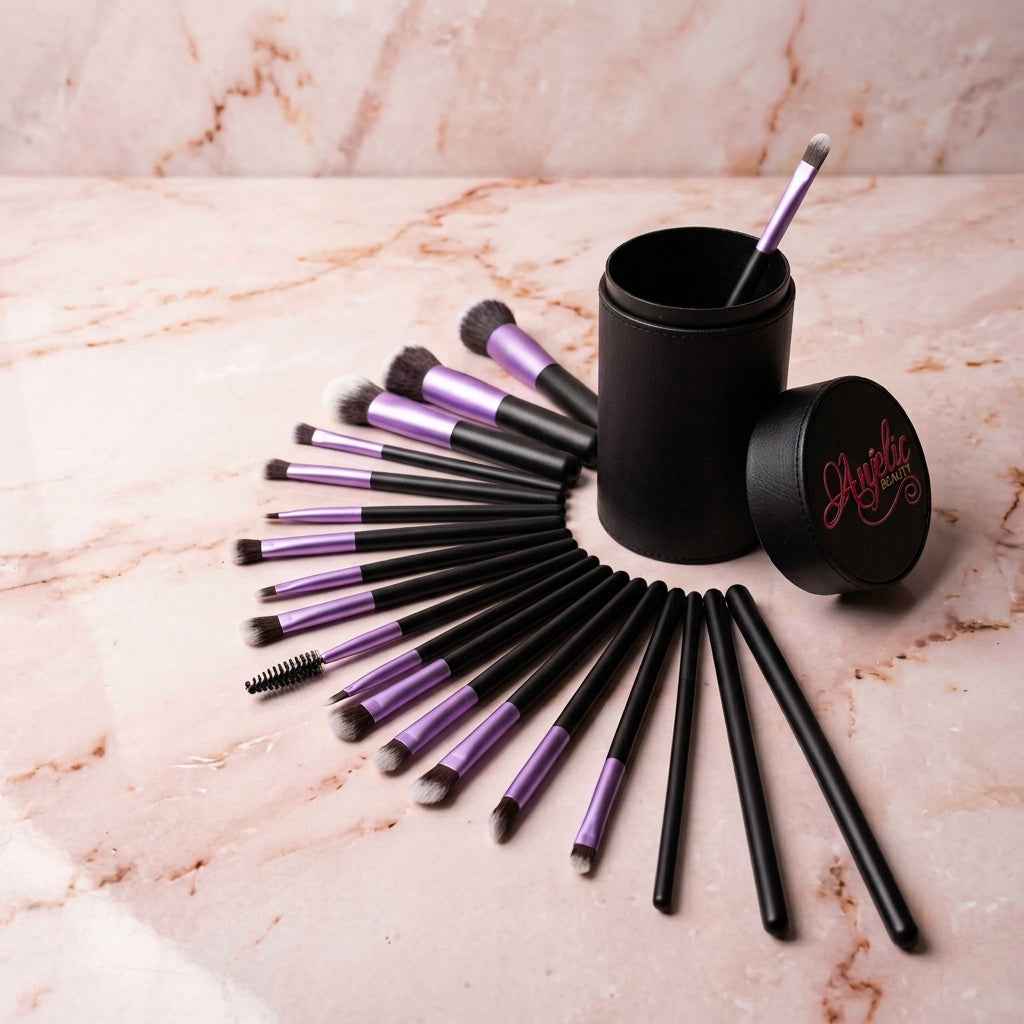
Building a professional makeup brush collection takes one afternoon of planning and a set that covers your real routine.
Frequently Asked Questions
How many brushes should a professional makeup artist have?
A professional makeup artist typically needs 15 to 25 brushes to handle different clients and formulas, but a beginner can start with 5 to 7 essentials. Focus on a foundation brush, powder brush, blush brush, and a few eye brushes. The Anjelic Signature Brush Collection includes 14 pieces that cover face and eye application, giving you a versatile foundation to build on.
What is the difference between synthetic and natural makeup brushes?
Synthetic bristles are made from materials like nylon or polyester, work well with cream and liquid products, and are easier to clean. Natural bristles come from animal hair, pick up powder products effectively, but require more careful maintenance. For ethical and practical reasons, many professionals now prefer synthetic brushes, which also tend to be more durable and less prone to shedding.
How do you clean makeup brushes properly?
Mix a small amount of gentle soap or brush cleanser with lukewarm water. Wet the bristles, swirl them in the soap, and rinse until the water runs clear. Avoid soaking the ferrule or handle. Reshape the bristles and lay them flat to dry. Clean foundation and concealer brushes weekly, and powder brushes every two to three weeks to prevent bacterial buildup.
What brushes are essential for a beginner building a collection?
Start with a foundation brush, a powder brush, a blush brush, and three eye brushes: a flat shader, a blending brush, and a detail brush. This core set handles most daily makeup applications. You can add a concealer brush and a contour brush later. A set like the Anjelic Signature Brush Collection provides these essentials plus extras at a reasonable price.