Free shipping on all orders
Table of Contents
- Why Your Makeup Looks Cakey and How to Fix It
- Skincare Prep for Makeup: Building Your Radiant Base
- Choosing the Right Foundation Finish for Natural Radiance
- Why Does Foundation Turn Orange and How to Prevent It
- Step-by-Step Application Technique for a Natural Radiance Look
- Tools That Matter: Application Methods to Avoid Cakey Makeup
- Common Mistakes to Avoid
- Conclusion
- Frequently Asked Questions
Last Updated: September 4, 2026
Why Your Makeup Looks Cakey and How to Fix It
The natural radiance look without cakey makeup is one of the most requested finishes in beauty, yet so many routines miss the mark. Cakey makeup is the result of product buildup on skin that isn't properly prepared, creating a mask-like effect that settles into fine lines and emphasizes texture. The good news is that achieving a radiant, skin-like finish isn't about applying more product; it's about layering the right formulas with intention.
The beauty industry has taken notice of this shift. According to Kaja Beauty's 2026 consumer trend analysis, 72% of consumers now prefer natural makeup looks over heavier applications. This preference reflects a broader movement toward products that enhance rather than mask the skin. At Anjelic Beauty, we've built our entire philosophy around this principle: your skin should look like skin, just perfected.
Below, we'll walk through the exact steps to achieve a luminous glow without the cakey aftermath. We'll cover skin prep, foundation selection, application technique, and the tools that make the difference. But first, here's what most guides get wrong: they focus on the makeup itself when the real culprit is almost always what happens before the foundation touches your face.
Skincare Prep for Makeup: Building Your Radiant Base
The foundation of any natural radiance look without cakey makeup is the skin underneath it. Hydrated, smooth skin holds makeup better and requires far less product to achieve a flawless appearance. Skipping prep forces you to compensate with thicker layers, which is precisely how cakey makeup begins.
Exfoliate to Remove Dead Skin
Dead skin cells are the number one cause of patchy, uneven foundation. When product catches on dry patches, it creates the textured, cakey appearance you're trying to avoid. Regular exfoliation removes this barrier, allowing makeup to glide on smoothly.
A gentle chemical exfoliant with AHAs or BHAs works well two to three times per week. Physical scrubs can be too abrasive, especially for sensitive skin. The goal is smooth, not stripped. Over-exfoliating damages your moisture barrier, which ironically leads to more dryness and more cakey makeup.
Hydrate With a Moisturizing Base
Hydration is the single most important factor in achieving a radiant finish. Allure's 2026 lightweight foundation review highlights that current formulas are evaluated on their ability to provide "soft-lit coverage" that makes skin look radiant without settling into lines. That soft-lit effect starts with a well-hydrated canvas.
Apply a moisturizer suited to your skin type and give it two to three minutes to absorb before moving to makeup. For an extra boost, mix a drop of facial oil or liquid highlighter into your moisturizer. This creates a natural luminosity from within, reducing the need for heavy, glow-imparting makeup layers.
Choosing the Right Foundation Finish for Natural Radiance
The finish you choose determines whether your look reads as fresh or heavy. The 2026 market has responded to consumer demand, with Beauty Independent's 2026 trends report noting that innovation now prioritizes "sheers, tints, and luminous finishes" that feel light and breathable. Your foundation should work with your skin, not cover it up.
Lightweight Formulas vs. Full Coverage
Full-coverage foundations are the most common cause of a cakey appearance. They contain higher pigment loads that sit on top of the skin, especially when layered over dry patches or fine lines. For a natural radiance look without cakey makeup, lightweight formulas are the better choice.
Skin tints, tinted moisturizers, and serum foundations offer sheer to medium coverage that evens out your complexion while letting your natural skin texture show through. If you need more coverage in specific areas, build it in thin layers rather than applying one thick coat. This approach prevents product buildup while still addressing redness or discoloration.
Satin and Dewy Finishes for Luminous Glow
The finish of your foundation controls how light interacts with your skin. Matte finishes absorb light, which can flatten your complexion and make skin look dull. Satin and dewy finishes reflect light, creating the natural luminosity that defines a radiant look.
Satin finish strikes the right balance for most skin types: it provides a subtle glow without looking greasy. If you have oily skin, apply a satin foundation and use targeted powder only where you actually need it, rather than all over. This preserves the glow where you want it while controlling shine in your T-zone.
Why Does Foundation Turn Orange and How to Prevent It
Foundation turning orange is an oxidation problem, and it's one of the most frustrating makeup issues. Oxidation occurs when the pigments in your foundation react with oxygen and the natural oils on your skin, causing the color to darken and shift toward orange or yellow tones. This is why your makeup can look perfect in the morning but noticeably different by lunchtime.
The fix starts with choosing a foundation engineered to resist this color shift. Formulas with True Tone Technology are designed to maintain their original shade throughout wear. Anjelic Beauty's AuraAlign™ Liquid Changing Foundation uses this approach, ensuring your color stays true from application to wear.

Your skincare routine also plays a role. Excess oil on the skin accelerates oxidation, so a proper primer and setting technique matter. Some makeup artists recommend using a color neutralizer or primer with a slight green tint to counteract any orange tones that emerge. The most reliable prevention, however, is selecting a non-oxidizing formula from the start.
Step-by-Step Application Technique for a Natural Radiance Look
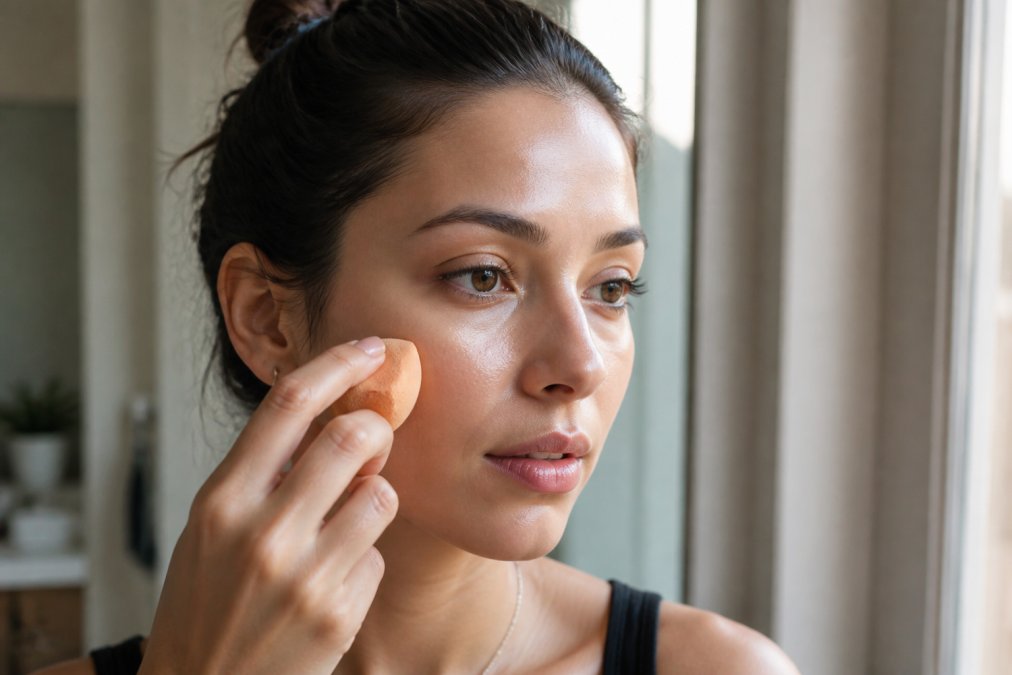
The difference between a radiant finish and a cakey one often comes down to how you apply your products. Technique matters as much as formulation. This step-by-step method produces a natural radiance look without cakey makeup, regardless of your skin type.
Step 1: Prime Your Skin
Primer creates a smooth, even surface for foundation while helping it adhere throughout the day. Choose a hydrating primer for dry skin or a pore-blurring formula for oily skin. Apply a thin, even layer and wait 60 seconds for it to set before moving on.
Step 2: Apply Foundation With a Buffing Technique
Start with a small amount of foundation, about the size of a pea, and apply it to the center of your face. Using a damp beauty sponge or a dense buffing brush, work the product outward in circular motions. This buffing technique presses the foundation into the skin rather than leaving it sitting on top. Build coverage in thin layers only where you need it.
Step 3: Blend Concealer Seamlessly
Apply concealer only where you need it: under the eyes, around the nose, and on any blemishes. Use a small, precise brush or your ring finger to tap the product in gently. Tapping, rather than rubbing, keeps the coverage where you placed it and prevents disturbing the foundation underneath. The goal is seamless application, where concealer and foundation blend into one unified finish.
Step 4: Set Without Matte Finish
Powder is where most radiant looks turn cakey. Instead of dusting powder all over your face, apply it only to areas that tend to get oily: your T-zone, under the eyes, and around the nose. Use a fluffy brush and a light hand, pressing rather than sweeping. For the rest of your face, let your foundation's natural finish shine through.
Tools That Matter: Application Methods to Avoid Cakey Makeup
Your tools shape how your makeup sits on your skin. The wrong applicator can ruin even the best foundation, while the right one creates a seamless, airbrushed finish. Investing in quality tools is one of the most effective ways to avoid cakey makeup.
Damp Beauty Sponge vs. Brush Application
A damp beauty sponge is the most reliable tool for achieving a natural radiance look without cakey makeup. The moisture prevents the sponge from absorbing too much product while allowing you to bounce the foundation into your skin for a sheer, skin-like finish. Squeeze the sponge until it's damp but not dripping, then use a bouncing motion rather than dragging.
Brushes offer more coverage but require more skill to avoid streaks. For foundation, a dense, flat-top kabuki brush with synthetic bristles works best. Synthetic bristles don't absorb product the way natural hairs do, and they create a smooth, buffed finish when used in circular motions.
The Right Brush for Seamless Blending
Not all brushes are created equal, and using the wrong one for a specific step creates uneven application. A comprehensive set that includes dedicated brushes for foundation, concealer, and cream products ensures each layer blends seamlessly into the next.
The Anjelic Signature Brush Collection includes 14 pieces designed for every step of your routine. The dense foundation brush delivers that buffed, airbrushed finish, while smaller precision brushes handle concealer and cream blush with accuracy. Quality synthetic bristles make blending effortless and prevent the streaky application that leads to patchy, cakey results.
Common Mistakes to Avoid
Even with the right products and tools, a few habits can sabotage your natural radiance look without cakey makeup. The most common mistake is applying too much product. Start with less than you think you need, then build up gradually. You can always add more, but removing excess foundation without disturbing your base is nearly impossible.
Another frequent error is skipping the wait time between skincare and makeup. When moisturizer or primer hasn't fully absorbed, foundation slides around and pools in pores. Give each layer time to set before applying the next. Similarly, rubbing rather than tapping concealer into place moves the product and creates uneven patches.
The "no-makeup" look also requires ongoing skin maintenance. As noted in discussions within the Facebook Beauty Community, hydrated skin is the primary requirement for a non-cakey finish. Consistent exfoliation and moisturizing routines prevent makeup from sitting poorly on the skin, so your radiant finish lasts from morning to night.
| Mistake | What Happens | The Fix |
|---|---|---|
| Too much product | Foundation pools in pores and lines | Start with a pea-sized amount, build in thin layers |
| Skipping prep time | Products slide and separate on skin | Wait 2-3 minutes between skincare and makeup |
| Powdering entire face | Flattens glow and creates texture | Powder only the T-zone and under-eye area |
| Dry tools | Product absorbs unevenly into bristles | Use a damp sponge or dense synthetic brush |
Conclusion
Achieving a natural radiance look without cakey makeup comes down to three principles: prepare your skin properly, choose lightweight formulas with the right finish, and apply with technique that enhances rather than masks. When your skin is hydrated and your products are layered thoughtfully, you get that luminous, skin-like glow without the heavy, textured aftermath.
Many foundations fail not because of poor application but because the formula itself oxidizes or shifts color throughout the day. Anjelic Beauty's AuraAlign™ Liquid Changing Foundation is designed to prevent this, with True Tone Technology that keeps your shade true from morning to night. Formulated with skincare-grade actives and 100% vegan pigments, it provides the lightweight, radiant coverage that celebrates your natural skin across 40+ shades.
Get yours now and experience makeup that works with your skin, not against it.
Frequently Asked Questions
How do I prevent my foundation from turning orange throughout the day?
Foundation oxidation occurs when pigments in the formula react with your skin's natural oils and pH levels. To prevent this, start with a hydrating primer to create a barrier between your skin and foundation. Choose formulas with non-oxidizing pigments, like Anjelic Beauty's AuraAlign™ Liquid Changing Foundation, which uses True Tone Technology engineered to stay true from application to wear. Set with a lightweight setting spray rather than powder, which can accelerate oxidation. Reapply sparingly during the day rather than layering more product over existing makeup.
What's the best way to achieve a natural radiance look without cakey makeup?
Start with proper skincare prep: exfoliate gently, hydrate with a moisturizing base, and use a hydrating primer. Select a lightweight, skin-tint formula with a satin or dewy finish rather than full-coverage foundations. Apply with a damp beauty sponge using a buffing technique to blend seamlessly into your skin. Use cream-based products like cream blush instead of powder to maintain a luminous glow. Finish with a light setting spray to lock in moisture while avoiding the matte finish that reads as cakey. The key is choosing formulas that allow your natural skin texture to show through while providing subtle coverage.
Does skincare prep really make a difference in how makeup looks?
Yes, skincare preparation is the foundation for a flawless, non-cakey finish. Exfoliation removes dead skin cells that cause makeup to sit unevenly and appear patchy. A hydrated skin surface allows foundation to glide on smoothly and blend seamlessly without clinging to dry patches or settling into fine lines. Moisturized skin also creates a stable base that prevents makeup from shifting and creasing throughout the day. Industry experts emphasize that hydrated skin is the primary requirement for achieving a radiant, non-cakey finish, making your skincare routine just as important as your makeup products.
What tools should I use to avoid a cakey makeup look?
A damp beauty sponge is your best tool for achieving a natural finish, it allows you to blend foundation seamlessly without applying excess product. The moisture in the sponge helps the formula meld into your skin rather than sitting on top. For precise application around the eyes and nose, use a small, soft-bristled brush with a buffing technique rather than stippling, which can build up product. The Anjelic Signature Brush Collection features premium synthetic bristles designed for seamless blending. Avoid dense, flat brushes that can deposit too much product; instead, choose fluffy, tapered brushes that distribute foundation evenly for a sheer, radiant finish.
This article was written using GrandRanker